NRC200 Full Automatic Spiral Paper Tube Making Machine is a high-speed, integrated production system that transforms rolls of paper into finished, cut-to-length spiral wound tubes with minimal human intervention. It is the backbone of modern, high-volume paper tube manufacturing.
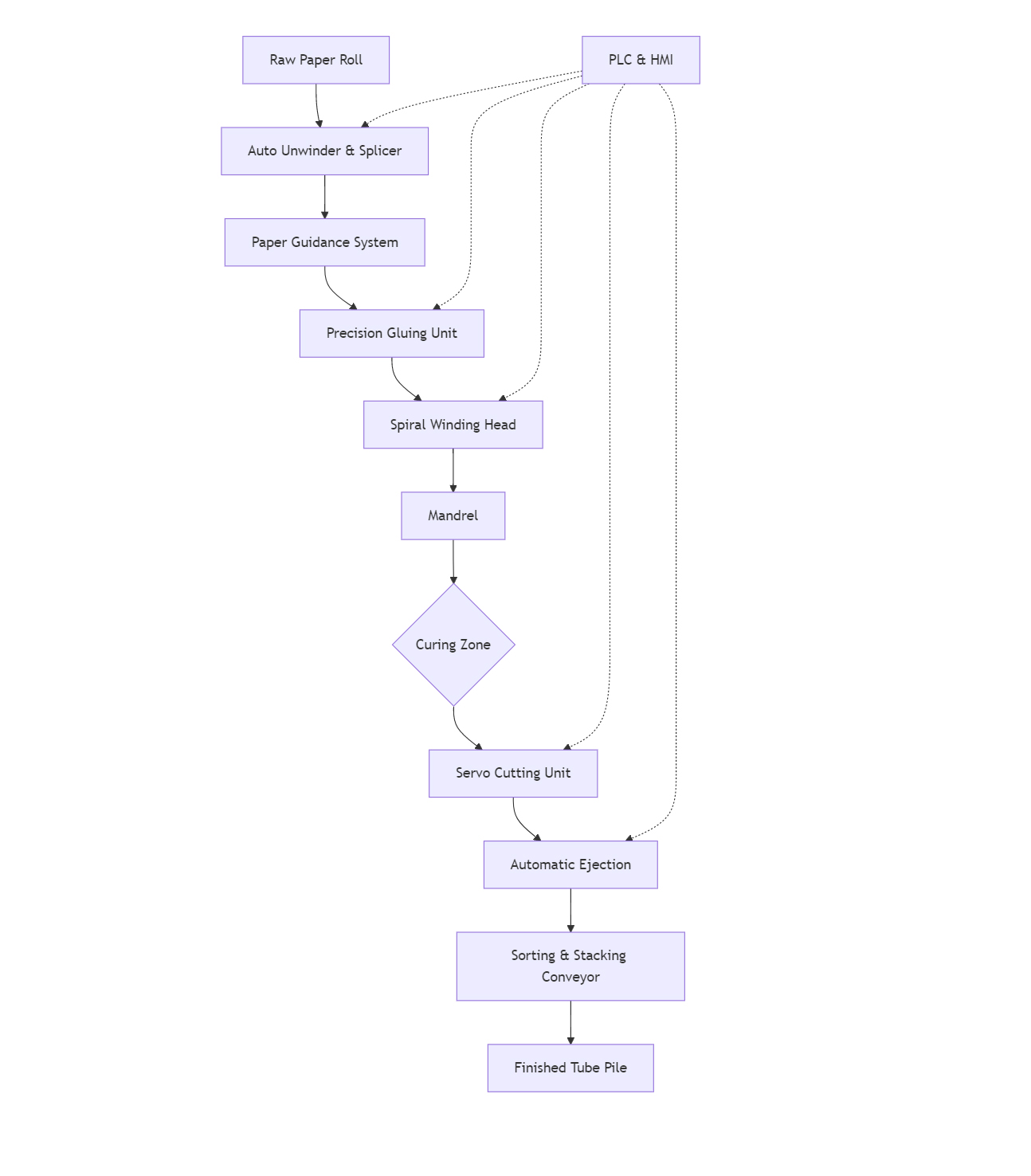
Core Components and How They Work The machine automates the entire process through a series of synchronized stations: Automatic Unwinding Station: Function: Holds multiple large rolls of paper (kraft, recycled, specialty papers). Key Feature: Non-stop Splicer. This is critical for automation. It automatically joins the end of one expiring paper roll to the start of a new one without stopping the machine, enabling continuous 24/7 operation.
Precision Guiding & Tension Control: Computer-Controlled Gluing System: Function: Applies a precise and even layer of adhesive (PVA, hot melt, etc.) to the paper. Key Feature: Closed-loop systems that monitor and maintain glue viscosity and temperature for optimal bonding, minimizing waste.
Spiral Winding Head & Mandrel: Function: This is where the tube is formed. Process: The glued paper is fed at a specific angle (e.g., 15°-85°) onto a rotating steel mandrel (which defines the tube's inner diameter). Key Feature: A winding carriage or belt system, driven by servo motors, wraps the paper under high pressure, ensuring tight, consistent layers and a strong spiral seam.
Drying/Curing Zone: Servo-Driven Cutting Unit: Function: Cuts the continuous tube to precise, pre-programmed lengths. Types: A rotary cutter is common for high-speed, clean cuts, while a saw cutter is used for very thick-walled tubes. Key Feature: The cutter synchronizes perfectly with the tube's linear speed, allowing for a clean cut without stopping production.
Automatic Ejection & Handling: Function: Pushes the finished tube off the mandrel and onto a conveyor. Advanced Systems: May include automatic stacking, counting, and even palletizing robots.
The Control Center - PLC & HMI: The Brain: A Programmable Logic Controller (PLC) runs the entire machine. The Interface: A Human-Machine Interface (HMI) touchscreen allows operators to input all parameters (diameter, length, speed) and store recipes for different products. It also provides diagnostic information and production data.
 Key Advantages of an Automatic SystemHigh Production Speed: Capable of outputs from 70 to over 150 meters per minute, depending on the tube specifications. Exceptional Consistency & Quality: Removes human error, ensuring every tube has identical dimensions, wall thickness, and bonding strength. Massive Labor Efficiency: Typically requires only 1-2 operators to monitor the entire process, instead of a large crew for manual tasks. Minimal Downtime: The automatic splicer allows for continuous operation, drastically increasing overall equipment effectiveness (OEE). Reduced Material Waste: Precision control over glue application and cutting leads to significant savings on raw materials. Improved Safety: Automated handling reduces worker interaction with cutting blades and moving parts.
|


