


What is a Paper Roll Slitter Rewinder?
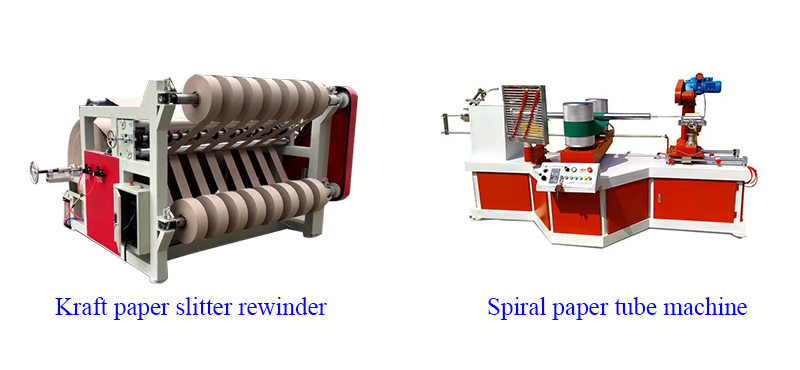
A paper roll slitter rewinder is a critical piece of industrial machinery used to convert large, master (or parent) rolls of paper into narrower, smaller-diameter rolls of specific widths and lengths. It is the workhorse of paper converting plants, packaging facilities, and printing houses.
Its primary functions are:
1. Slitting: Precisely cutting the wide web of paper longitudinally into multiple narrower strips. 2. Rewinding: Winding these slit strips onto new cores to create finished, customer-ready rolls.
Why is it Used?
Master rolls produced by paper mills are enormous (often several meters wide and weighing multiple tons) and are not usable by end customers. The slitter rewinder enables:
· Width Customization: Creating rolls in the exact widths required for specific applications (e.g., cash register rolls, labels, packaging material). · Length Management: Rewinding the paper to a specific length or diameter for handling and sale. · Quality Inspection: The process allows for the removal of defects (splices, tears) found in the master roll. · Tension Control: Rewinding the paper with precise tension to ensure tight, stable, and trapezoidal (non-bulging) rolls that perform well on high-speed machines.
Key Components of a Slitter Rewinder
While designs vary (Unwind-Stand-Process-Rewind), a typical machine has the following sections:
1. Unwind Stand (Unwinder):
· Function: Holds and controls the unwinding of the master roll. · Key Features: Often includes a hydraulic or pneumatic shaft to grip the core, a brake system to control back-tension, and dancers or load cells for precise tension measurement.
2. Web Guide System:
· Function: Ensures the paper web is running perfectly centered as it enters the slitting section. This is critical for preventing uneven slitting and ensuring all narrow strips are the correct width.
3. Slitting Section:
· Function: This is where the actual width-wise cutting happens. There are two primary slitting methods: · Razor Slitting (Shear Cut): Uses a sharp, circular razor blade positioned against an anvil roll. Ideal for lighter-weight papers, films, and non-wovens. Offers clean cuts. · Score (Crush) Slitting: Uses two matched, hardened steel rotary knives—a top "male" knife and a bottom "female" anvil knife. The web is "crush-cut" between them. This is the most common method for paper and heavier materials, providing a clean, dust-free edge.
4. Spreader / Pre-Rewind Section:
· Function: A series of bowed rolls that flatten the web and separate the slit strands to prevent them from overlapping or "telescoping" during rewinding.
5. Rewind Stand (Rewinder):
· Function: Winds the slit paper strands onto new cardboard or plastic cores. · Key Methods: · Center-Surface Rewind: The most common method. The new cores are driven by a central shaft, while a surface drum (or rider roll) rides against the new rolls to control tension and ensure a hard, uniform wound roll. · Center Rewind: The cores are driven only by a central shaft. Offers more control over individual roll tension but is more complex.
6. Drive System & Control Panel:
· Function: The brain of the machine. A modern slitter uses PLCs (Programmable Logic Controllers) and AC vector drives to precisely control the speed, tension, and synchronization of all sections. The operator sets parameters like speed, slit width, and roll length here.
|
Main technical parameter
Max.raw paper width: | 1600mm |
Max.raw paper diameter: | 1200mm |
Max.finish roll diameter: | 800mm |
Min.slitting width: | 50mm |
Main motor power: | 4kw |
Paper grams: | 50g-600g |
Paper loading type: | pneumatic loading |
Control type : | electromagnetic control |
Speed: | 150m/min |
Winding way: | pneumatic A B shaft winding |
Voltage: | 380V 50Hz |
Operating people quantity: | 1 people |


