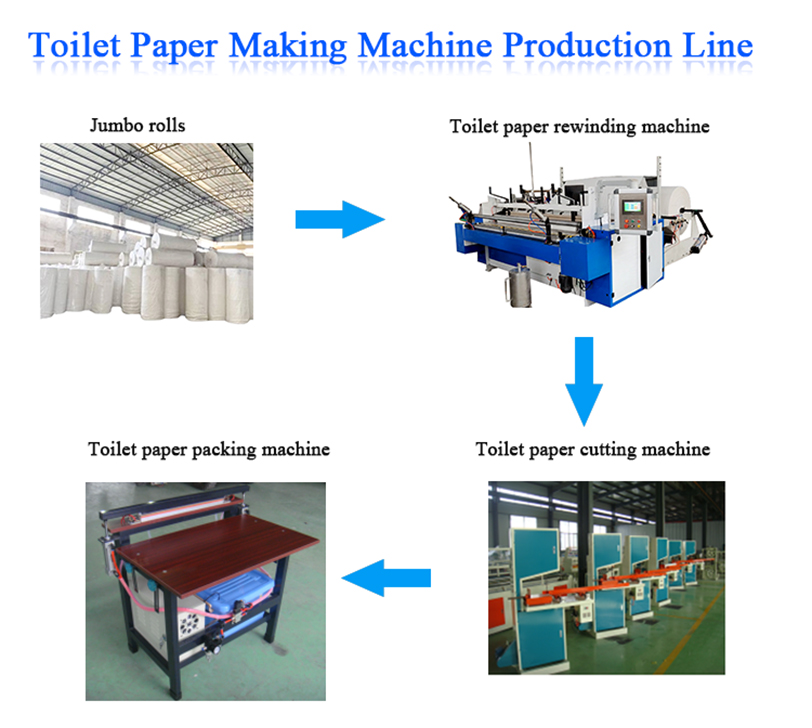
2.Full Automatic Toilet Paper Making Priduction Line 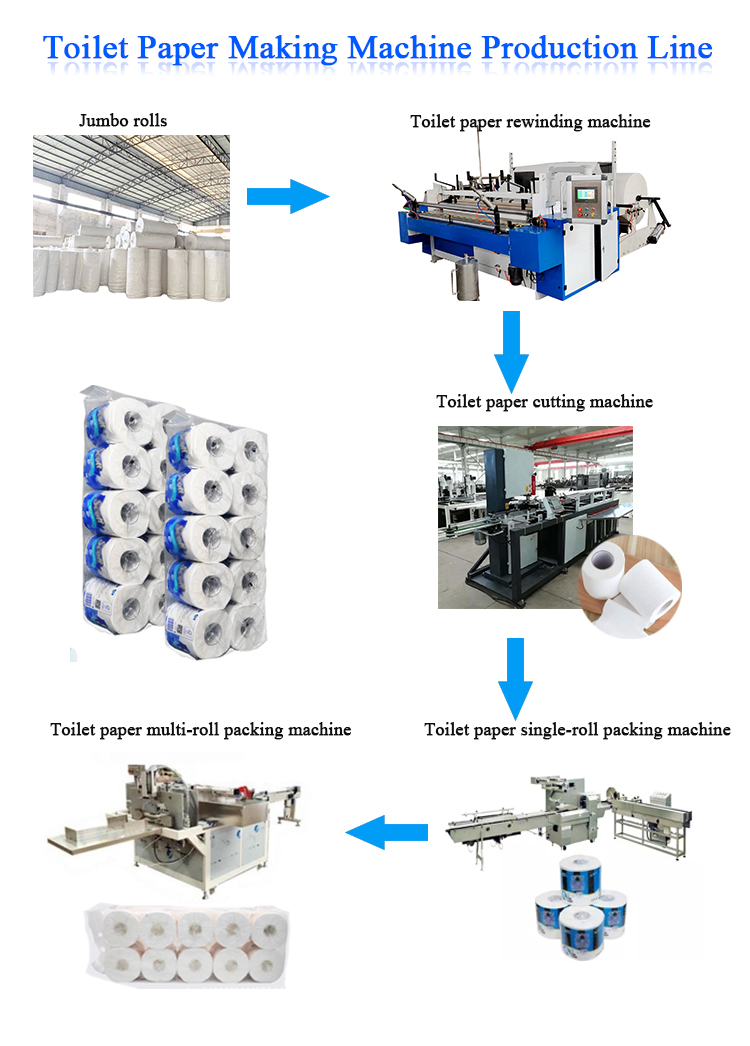
A typical machine is divided into three main sections that correspond to its name: 1. Rewinding Section (The Unwind and Rewind) Jumbo Roll Stand: Holds the large, uncut roll of paper (the jumbo roll). It often has a pneumatic or mechanical brake to control tension. Paper Guide System: Ensures the paper web feeds smoothly into the machine without wrinkles. Embossing Unit (Optional): Two steel rollers that press a pattern into the paper piles (usually 2-ply). This improves softness, aesthetics, and absorbency. Gluing Unit (Optional): Applies a thin line of glue between the two paper plies to bond them together after embossing. Rewind Shafts: The core of the operation. Here, the paper is wound onto cardboard cores. A high-speed rewinder uses multiple shafts to allow for continuous operation.
2. Cutting & Log Saw Section Perforation Unit: A critical component that creates the micro-perforations between sheets, allowing them to tear cleanly. Slitting Blades: Sharp, circular blades that trim the edges of the paper and slit the wide paper web into multiple, narrower strips (depending on the target roll width). Log Saw: A high-speed circular saw or a band saw that automatically cuts the long, continuous "log" of wound paper into individual consumer-sized rolls.
3. Packing Section Automatic Wrapper: Wraps each individual roll in plastic film (e.g., polypropylene or polyethylene). Heat Sealing Unit: Creates a tight, neat seal on the ends of the plastic wrap. Collection Conveyor: Transports the wrapped rolls to a collection point or to a secondary packing station for grouping into larger packs.
Step-by-Step Working ProcessLoading: A jumbo roll is loaded onto the unwind stand. Cardboard cores are placed on the rewind shafts. Threading: The paper web is threaded through the guide rollers, embosser, gluer (if equipped), and perforation unit. Rewinding: The machine starts. The paper is wound onto the cores on the rewind shafts at high speed. The tension control ensures tight, firm rolls. Slitting & Perforating: As the paper is wound, the slitting blades trim and slit the web, and the perforation unit creates the tear lines. Log Ejection & Cutting: Once a pre-set length (forming a long "log" of multiple future rolls) is reached, it is ejected from the rewind shaft. The log is then pushed through the log saw, which cuts it into individual rolls. Automatic Wrapping: The individual rolls are fed into the wrapping machine, where they are enveloped in plastic film. Sealing & Output: The wrapped rolls pass through a heat sealer to seal the ends, and are then discharged onto a conveyor belt. Secondary Packaging (Optional but common): The wrapped rolls are often manually or automatically grouped into multi-packs (e.g., 4-packs, 6-packs, 12-packs) and put into bags or shrink-wrapped.
Advantages of Using Such a MachineHigh Efficiency: Replaces a large amount of manual labor, dramatically increasing production speed. Consistency & Quality: Produces rolls of uniform size, tightness, and perforation quality. Scalability: A "small" machine is a perfect entry point for a business to start production. Reduced Labor Costs: Automates the most labor-intensive parts of the process. Versatility: Can often be adjusted to produce different roll diameters, widths, and sheet counts.
|


