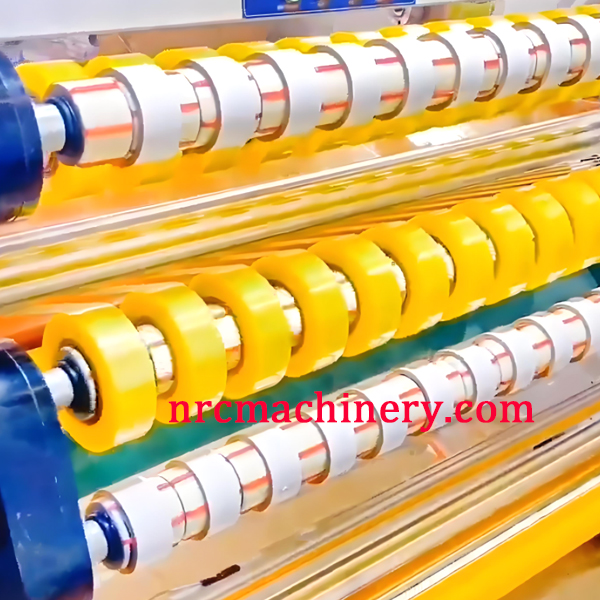
Industrial Adhesive Tape Making MachineThis is a heavy-duty, continuous production line used in factories. The process is highly automated and can be broken down into several key stages. Core Components of an Adhesive Tape Machine:Unwinding Station: A large roll of backing material (e.g., polypropylene film, PVC, cloth, paper) is mounted here and fed into the machine. Surface Treater (e.g., Corona Treater): This unit uses an electrical discharge to increase the surface energy of the backing material. This ensures the adhesive will stick to it properly. Coating Head: This is where the adhesive (which can be water-based, solvent-based, hot-melt, or acrylic) is applied evenly onto the backing material. Common coating methods include knife-over-roll, slot-die, or gravure. Drying Oven (for certain adhesives): A long, heated tunnel that evaporates the water or solvents from the adhesive, leaving a dry, tacky layer. Laminating Station (Optional): For double-sided tape, a release liner (like silicone-coated paper) is applied here. For single-sided tape, the adhesive side might be laminated to a release film to prevent it from sticking to itself on the roll. Curing/Oven Section (for certain adhesives): Some adhesives, like certain acrylics, require UV light or heat to fully cure and develop their final properties. Rewinding Station: The finished tape is wound onto a large, wide "jumbo roll" (or "log roll"). This is the primary output of the tape making machine. Slitting Machine (a separate but integral machine): The jumbo roll is then transferred to a slitting machine. This machine uses sharp, circular blades to cut the wide jumbo roll into multiple narrower rolls of the desired width (e.g., 1/2 inch, 1 inch, 2 inches). Core Cutter & Taping: The slit rolls are then cut to the final length (e.g., 40 yards, 55 yards) and the free end is taped down. Finally, they are labeled and packaged.
|