DetailTechnical Parameter
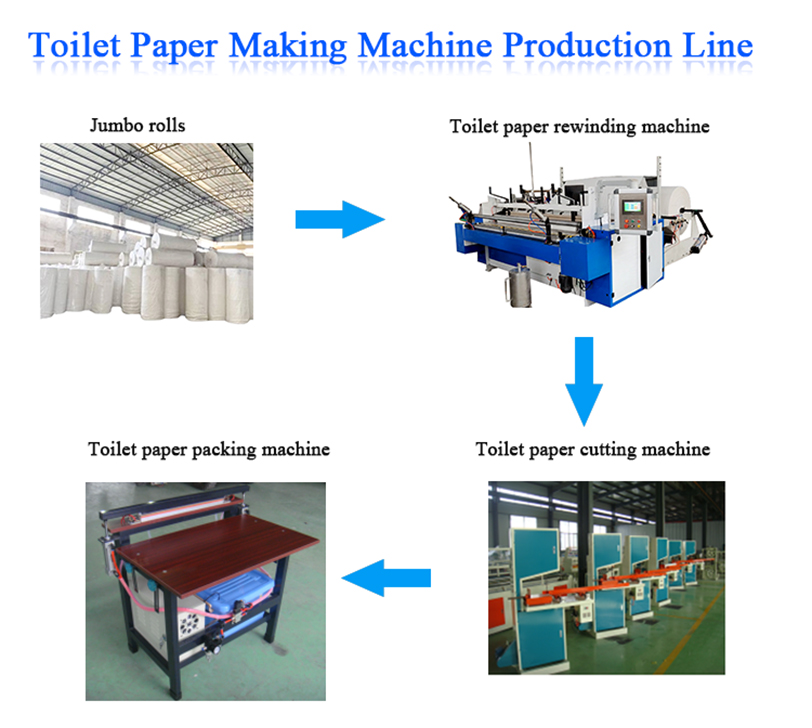
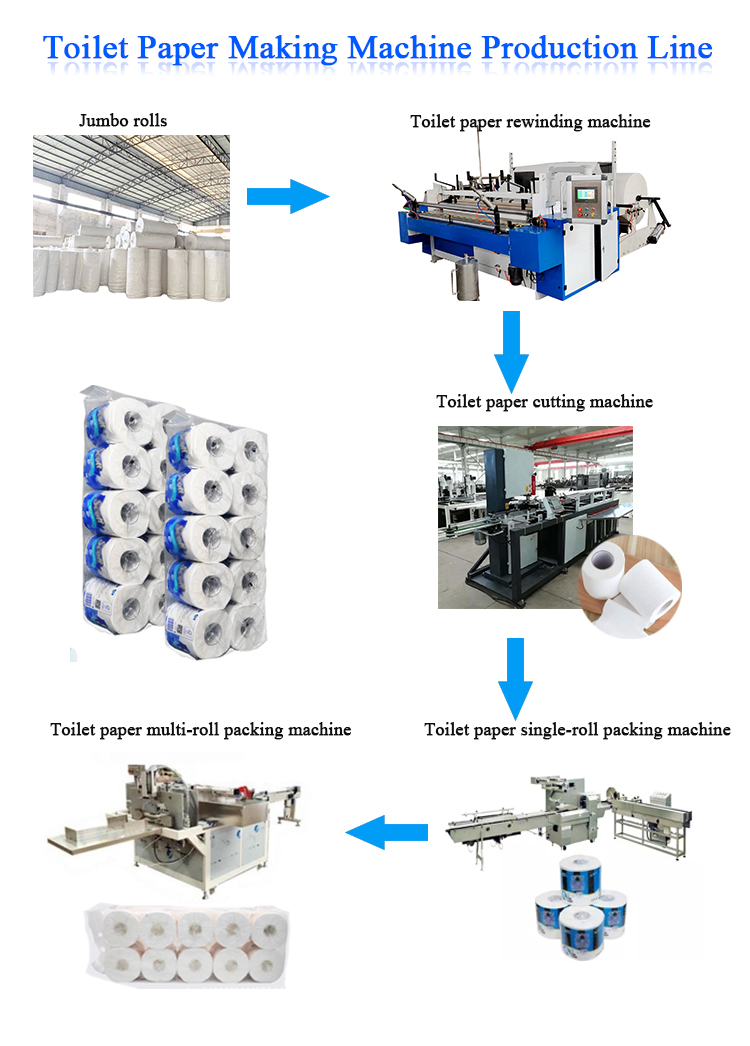
| The Converting Line (Making the Rolls) This stage takes the jumbo rolls and turns them into the finished product. Unwind Stands: One or more jumbo rolls are loaded and fed into the line. For 2-ply toilet paper, two webs are fed simultaneously. Embossing: The paper passes through rollers with patterns that press designs into it. This adds decoration, texture, and improves softness. Ply Bonding (for 2-ply): If making 2-ply, the two embossed webs are brought together. Glue is applied at the embossed points to bond them. Perforating: A blade creates the tear-off perforations between sheets. Rewinding: This is the core of the "rolls making" process. The paper is wound at high speed onto long cardboard tubes. The machine winds it to a precise diameter and then cuts the paper, creating a continuous "log" of toilet paper. Log Sawing: The long logs are cut by a bank of circular saws into individual, consumer-sized rolls. Packaging: The individual rolls are automatically wrapped in plastic or paper, grouped together, and placed into cardboard boxes for shipping.
|
Model | 1880mm ~2000mm |
Applicable Raw Paper | 2-3 plies 14~23g/㎡Wood pulp paper |
Finished product | Toilet rolls with core /without core |
Raw Paper Width | Max 2100mm |
Raw Paper Diameter | Max1300mm |
Finished Size | Φ60~130 mm |
Finished Core Diameter | Φ35mm-Φ50mm |
Raw Paper Core Diameter | 3”(76.2 mm) |
Perforation | Spiral perforating knife,Chain wheel positioning |
Production Speed | 200 m/min |
Power | 12kw |
Parameter Design | LCDTouch Screen |
Control | PLC |
Paper Feeding | 3 Unwinding stands,controlled by pneumatic |
Air Pressure | 0.5 Mps |
Power | 380V,50hz |


