How Adhesive Tape Slitting Rewinding Machines Work: A Complete Structural Guide 2026
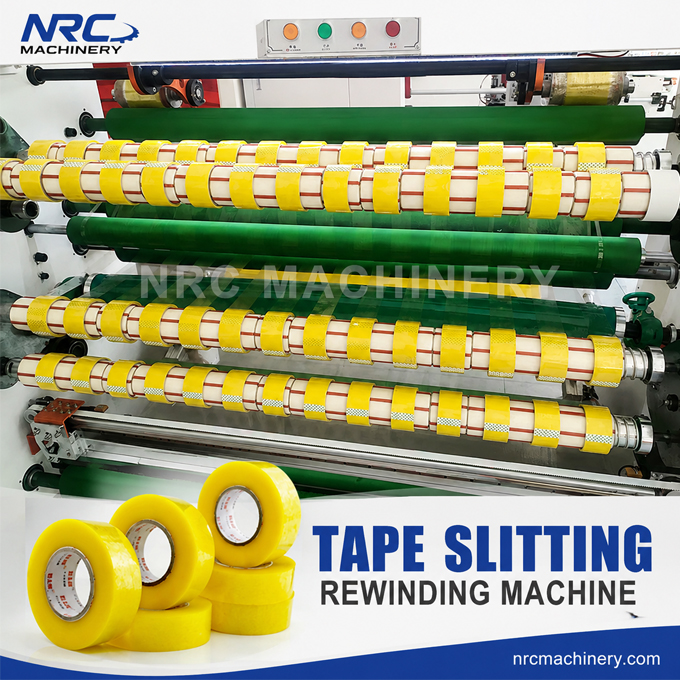
Subtitle: Step-by-Step Working Mechanism, Core Components and Industrial Functional Advantages of Tape Slitting Rewinding Equipment
Published Date: September 07, 2026
Industry Category: Converting Machinery / Packaging Equipment / Industrial Processing Technology
1. Introduction: Overview of Tape Slitting Rewinding Machine
Adhesive tape slitting rewinding machines are core automated converting equipment designed for the post-processing of jumbo adhesive tape rolls. In the industrial packaging, electronic manufacturing, logistics and construction industries, raw adhesive tapes are always produced in large-diameter, wide-width master rolls that cannot be directly used for end-market sales and application. This professional slitting and rewinding equipment realizes standardized processing: splitting wide jumbo rolls into custom narrow-width tape strips and rewinding loose tape materials into tight, neat, qualified finished rolls.
Different from ordinary cutting machines, the adhesive tape slitting rewinding machine features integrated structural design, combining material unwinding, precision slitting, constant-tension rewinding and intelligent error correction. Its complete structured working process ensures zero damage to the adhesive layer, consistent roll tightness and uniform product specifications, which explains why it has become standard configuration for modern tape processing factories. This article systematically analyzes its complete working structure and operating logic for enterprise buyers and industry technicians.
2. Overall Structural Framework of The Machine
The entire operation of the adhesive tape slitting rewinding machine follows a linear and closed structural workflow. All functional modules operate in a fixed sequence, forming a mature automated production loop. The complete machine structure is divided into five core functional areas, including unwinding system, tension control system, precision slitting system, rewinding system and intelligent auxiliary correction system. Each module is independent in function and closely linked in operation, supporting continuous 24-hour stable industrial production.
This modular structured design not only improves the operational stability of the equipment but also facilitates daily maintenance, parameter debugging and later equipment upgrading. Each structural unit corresponds to a specific production link, avoiding functional confusion and production errors caused by integrated disordered design.
3. Step-by-Step Structured Working Process
3.1 Raw Material Unwinding Stage (Initial Feeding Module)
The first structural link of the equipment operation is automatic unwinding. Operators fix the large-size original tape jumbo roll on the pneumatic unwinding shaft. The equipment adopts a hydraulic lifting feeding structure, which realizes labor-saving and stable installation of heavy raw material rolls. After the equipment is started, the unwinding shaft rotates at a synchronous adjustable speed to release the continuous tape web.
The core structural advantage of this stage is stable feeding. The anti-offset limit structure on both sides of the unwinding shaft effectively prevents the jumbo roll from shifting during high-speed rotation, laying a foundation for subsequent precise slitting.
3.2 Constant Tension Control Stage (Stabilization Module)
Tension control is the core intermediate structural link connecting unwinding and slitting, and it is also the key to determine the yield of finished tape products. The machine is equipped with a high-sensitivity automatic tension sensor structure. In the operation process, the sensor monitors the tightness of the tape web in real time and feeds data back to the PLC intelligent control system.
When the tape is too loose or too tight, the system will automatically adjust the operating speed of the unwinding and rewinding shafts to maintain constant tension. This structured closed-loop control completely avoids common production defects such as tape stretching, adhesive layer falling off, wrinkling and edge warping, ensuring the flatness and integrity of the tape base material all the time.
3.3 Precision Slitting Stage (Core Processing Module)
The slitting system is the core functional structure of the whole equipment, responsible for custom width cutting of the original wide tape. The machine is equipped with a dual-purpose slitting tool structure, supporting two mainstream cutting modes: razor blade slitting and circular shear slitting, adapting to different types of adhesive tapes.
For thin materials such as packing tape and transparent adhesive tape, the high-precision fixed razor blade structure is adopted for linear flat cutting, with smooth cutting edges and no burrs. For thick industrial adhesive tapes, foam tapes and high-viscosity electrical tapes, the upper and lower circular knife shear structure is used for extrusion cutting to avoid adhesive sticking to the tool. Operators can set arbitrary slitting width through the touch screen, and the electronic positioning structure realizes accurate millimeter-level cutting, meeting customized order production requirements.
3.4 Synchronous Rewinding Stage (Forming Module)
After slitting, the divided narrow tape strips enter the rewinding structural area synchronously. The equipment adopts an independent multi-shaft synchronous rewinding structure, which can wind multiple groups of finished tapes at the same time without mutual interference. Equipped with a high-precision length counting and diameter detection structure, the machine can automatically monitor the winding length and roll diameter in real time.
When the finished roll reaches the preset specification parameters, the system will automatically alarm and stop winding. High-end models are equipped with an automatic roll-changing structure, which can complete material switching in a few seconds, greatly reducing manual standby time and improving overall production efficiency. The rewinding structure adopts uniform force design, ensuring that each finished tape roll is tight, neat and consistent in thickness.
3.5 Waste Trimming and Correction Stage (Auxiliary Optimization Module)
As the final auxiliary structural link, the edge trimming and web correction system optimizes product quality comprehensively. The automatic edge trimming structure cuts off the uneven edge waste of the original tape, and the waste material is automatically discharged through the air suction device, ensuring the neatness of the finished tape edge. The photoelectric web guide correction structure tracks the tape running track in real time, automatically correcting material deviation during long-term high-speed operation, and effectively reducing the defective rate.
4. Core Structural Advantages of The Equipment
First, the modular structured layout realizes separated and collaborative operation of each functional link, with high production stability and low failure rate. Second, the closed-loop tension control structure and intelligent correction structure achieve high-precision production, with a product qualification rate of over 99%. Third, the integrated human-machine control structure simplifies operation, and all production parameters can be adjusted with one screen, reducing the technical threshold for operators. Fourth, the standardized mechanical structure supports long-term continuous industrial operation, with strong durability and low maintenance cost.
5. Industrial Application Value and Market Prospect
With the continuous expansion of the adhesive tape application market in packaging, electronic assembly, automotive industry and construction fields, the demand for customized specifications and high-quality tape products is increasing day by day. The structured and standardized working mode of the adhesive tape slitting rewinding machine can perfectly match small-batch customized production and large-scale mass production scenarios.
By optimizing the internal operation structure of the equipment, modern slitting and rewinding machinery continues to reduce production costs for tape processing enterprises, improve product consistency and market competitiveness, and has become an indispensable core equipment in the global converting industry.
6. Frequently Asked Questions (FAQs)
Q1: What is the working principle of an adhesive tape slitting rewinding machine?
A1: The machine operates through a complete modular workflow, including automatic unwinding, constant tension stabilization, precision slitting, synchronous rewinding, and web correction. It converts large jumbo tape rolls into custom‑size, neat, high‑quality finished tape rolls with automated PLC intelligent control, ensuring stable and high‑precision industrial processing.
Q2: What types of adhesive tapes can this machine process?
A2: It supports almost all mainstream adhesive tape types, including BOPP packing tape, double-sided tape, foam tape, masking tape, cloth tape, electrical tape and PET adhesive tape. It adapts to thin, thick, low-viscosity and high-viscosity tape materials via adjustable cutting modes and tension parameters.
Q3: What are the differences between razor slitting and circular shear slitting?
A3: Razor slitting is suitable for thin, low-viscosity tapes, providing ultra-smooth cutting edges without burrs. Circular shear slitting adopts upper and lower rotating circular knives, ideal for thick, foam-backed and high-viscosity tapes, effectively avoiding adhesive sticking and ensuring clean cutting results.
Q4: Why is constant tension control critical for tape slitting and rewinding?
A4: Constant tension control avoids core production defects. Excessive tension will stretch the tape base and damage the adhesive layer, while insufficient tension causes loose rolls, wrinkling and edge deviation. The closed-loop tension system maintains consistent tape tightness throughout the production process to guarantee high yield.
Q5: Is the tape slitting rewinding machine suitable for custom production?
A5: Yes. Operators can freely set custom slitting width, winding length and roll diameter via the HMI touch screen. The equipment supports both small-batch customized orders and large-scale mass production, meeting diverse industrial tape processing and market sales demands.
7. Conclusion
The working principle of the adhesive tape slitting rewinding machine is a complete set of structured and modular automated production processes. From raw material unwinding, tension stabilization, precision slitting, synchronous rewinding to intelligent auxiliary correction, each structural link is closely connected and mutually restricted, forming an efficient, stable and high-precision production system. Understanding its internal structural working mechanism can help industrial buyers select suitable equipment and optimize production lines, so as to maximize production benefits in the tape converting industry.


