
Adhesive Tape Rolls Slitting Rewinding Machine
Tape Making Machine
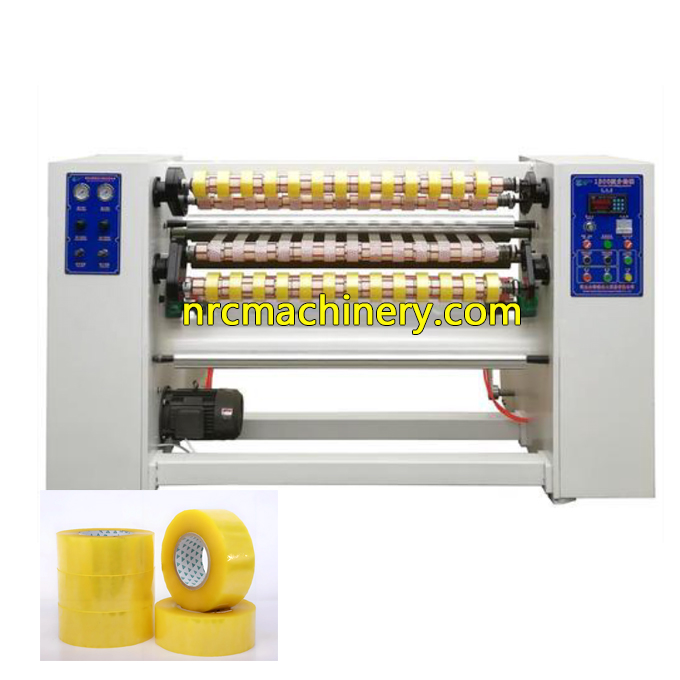
What is a
Tape Slitting and Rewinding Machine?
It's a machine designed to take a large, master (or "jumbo") roll of material and convert it into multiple, narrower rolls of a specified width. This is an essential process for producing the consumer and industrial tape rolls you see everywhere.
Main parts of the tape rolls making machine.
Unwind Stand: Holds the large master roll. It can be a simple shaft or a more sophisticated motorized unwind with tension control to prevent stretching or breaking.
Web Guide System: Ensures the material enters the slitting section straight and consistently, crucial for achieving uniform slit widths.
Slitting Section: The heart of the machine. This is where the actual cutting happens. There are different methods (see below).
Rewind Shaft: A heavy-duty shaft that holds the multiple cores onto which the slit tapes are wound. The number of positions on the shaft determines the maximum number of smaller rolls you can produce.
Tension Control System: A critical system that manages the web tension throughout the process. Proper tension is vital for producing tight, neat rolls without defects like telescoping or loose layers.
Drive System: The motors and controls that power the unwind, slitting, and rewinding operations, ensuring synchronized speed.
Control Panel: A modern machine will have a PLC (Programmable Logic Controller) and HMI (Human-Machine Interface) touchscreen to set parameters like speed, length, and tension.
Applications
These machines are used to produce almost every type of roll product you can think of:
Packaging Tapes: PVC, BOPP, etc.
Double-Sided Tapes
Masking Tapes
Duct Tapes
Electrical Tapes
Medical Tapes
Label Stocks
Adhesive Transfer Tapes


