


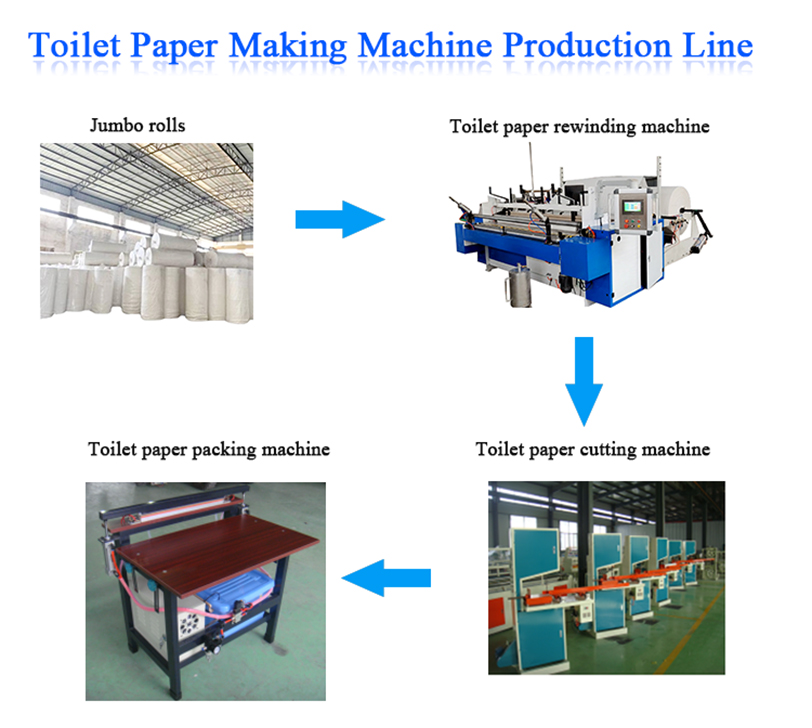

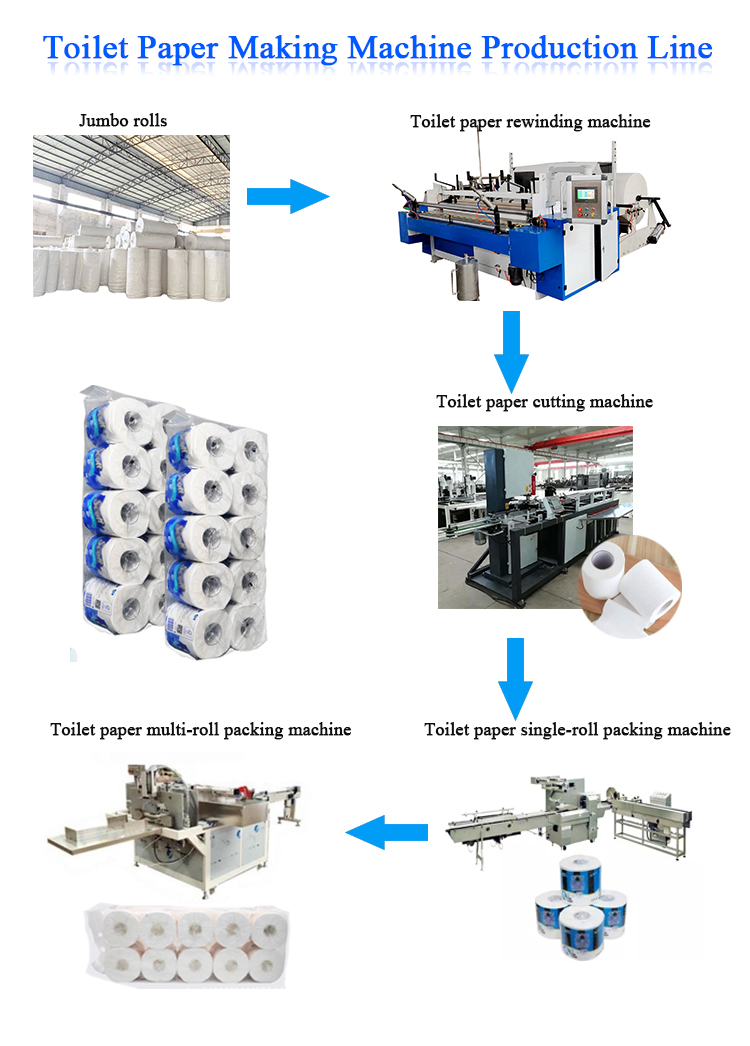
Toilet paper subsequent processing equipment" refers to the machinery that takes the large, parent rolls of paper coming directly from the paper mill (called jumbo rolls or parent rolls) and converts them into the final, packaged consumer product you find on store shelves. The Core Stages of a Toilet Paper Converting Line1. Unwinding and SplicingThis is the start of the line where the jumbo rolls are loaded.
2. Embossing and Ply BondingThis step gives the toilet paper its texture (embossing) and, for 2-ply or 3-ply products, bonds the layers together.
3. Perforating and Log SlittingThis is a critical step that defines the individual sheets and the roll width.
4. RewindingThis step winds the perforated and slit paper onto the cardboard core to create the final-sized consumer roll.
5. Log Sawing / CuttingThe long, continuous "logs" from the rewinder need to be cut into individual rolls.
6. Wrapping and PackagingThis is the final stage where rolls are prepared for sale.
|
Model | 1880mm ~2000mm |
Applicable Raw Paper | 2-3 plies 14~23g/㎡Wood pulp paper |
Finished product | Toilet rolls with core /without core |
Raw Paper Width | Max 2100mm |
Raw Paper Diameter | Max2100mm |
Finished Size | Φ60~130 mm |
Finished Core Diameter | Φ35mm-Φ50mm |
Raw Paper Core Diameter | 3”(76.2 mm) |
Perforation | Spiral perforating knife,Chain wheel positioning |
Production Speed | 200 m/min |
Power | 12kw |
Parameter Design | LCDTouch Screen |
Control | PLC |
Paper Feeding | 3 Unwinding stands,controlled by pneumatic |
Air Pressure | 0.5 Mps |
Power | 380V,50hz |


