


Small Toilet Paper Making Machine Line — Compact Converting Line from Jumbo Roll to Finished Rolls
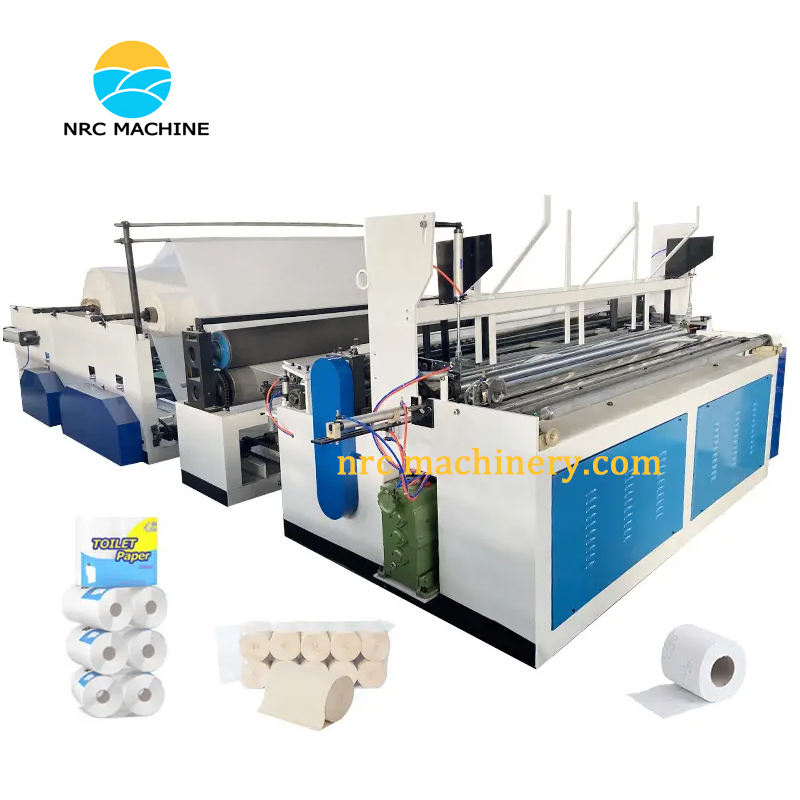
1.What Is a Small Toilet Paper Production Line?
A small toilet paper production line is a compact, semi-automatic or fully automatic converting line designed for producers who need lower output than industrial giants while keeping the same complete converting workflow on a smaller scale. Instead of purchasing several separate, high-capacity machines, a small line brings the essential converting stages into one coordinated system that is simple to install, operate, and expand.
It is best described as a complete converting line scaled down — the same sequence of steps that large mills use, engineered for modest budgets, modest workshop space, and modest daily targets. This makes it an ideal first step for startups, local brands, and regional producers entering the tissue paper converting business.

2. Key Characteristics of the Small Production Line
Input — Jumbo Rolls: The line runs on pre-produced jumbo rolls of tissue paper as the raw material, so you do not need a paper mill or a full stock-preparation plant.
Output — Finished Rolls: It produces finished, consumer-ready toilet paper rolls, ready for branding, packing, and sale.
Production Scale: Suitable for producing from a few hundred to several thousand rolls per day — flexible enough to match your market demand.
Space Requirement: Requires only a modest workshop space, which keeps overheads low and makes the line viable even in smaller or rented facilities.
Because the machine set is compact, it offers a low barrier to entry while still delivering a finished, sellable product.
3.Core Components of a Small Toilet Paper Production Line
A small line consists of several machines that perform sequential tasks, each handling one stage of converting:
3.1 Unwind Stand
The unwind stand holds the large jumbo roll and allows for controlled unwinding. It often includes a splicing unit that seamlessly joins a new jumbo roll when one runs out, avoiding downtime and wasted paper during roll changes.
3.2 Embosser (Optional but Common)
The embosser passes the paper between two engraved rollers to create patterns such as hearts or diamonds. Beyond adding aesthetic value to your product, embossing improves softness by crinkling the paper, giving the finished rolls a more premium feel that buyers notice.

3.3 Perforator & Rewinder (The Heart of the Line)
This is the core module of the whole line. It performs three critical jobs at once:
Folds the paper into 2-ply (or more) when multiple jumbo rolls are used;
Creates the perforated lines between sheets for easy tearing;
Winds the paper onto long cardboard cores, forming a continuous "log" of toilet paper.
3.4 Log Saw / Cutter
A high-speed circular saw cuts the long log into individual toilet paper rolls of the correct consumer size, giving you the standard roll width your market requires.
3.5 Auto Packaging Machine (Optional for Very Small Setups)
The packaging machine wraps the individual rolls in plastic film or bags them into multi-roll packs. In the smallest setups, packing can be done manually, allowing you to start with even lower investment and upgrade later.
4. How the Production Line Works — Step by Step
Unwinding — the jumbo roll feeds tissue paper into the line from the unwind stand.
Embossing — paper passes through the embosser to add patterns and improve softness.
Perforating & Rewinding — paper is folded to the desired ply, perforated, and wound into logs.
Cutting — the log saw slices the log into consumer-sized rolls.
Packaging — rolls are wrapped or bagged, ready for distribution.
This continuous, sequential workflow means one small line can carry the entire job from raw jumbo roll to finished, pack-ready product under one roof.


5. Who Is This Production Line For?
The small toilet paper production line suits:
Startups and new tissue producers entering the market with limited capital;
Local and regional brands supplying supermarkets, wholesalers, and convenience stores;
Producers upgrading from manual or outsourced converting who want in-house control over quality and margins;
Businesses testing a new market or new product line without committing to industrial-scale machinery.
Because it delivers finished rolls from pre-produced jumbo rolls, it lets you focus on converting and selling rather than managing a full papermaking operation.
6. FAQ (Frequently Asked Questions)
Q: What raw material does a small toilet paper production line use?
A: It uses pre-produced jumbo rolls of tissue paper as the input. Because the raw material comes ready-made, you do not need a paper mill — the line only performs the converting stages.
Q: How many rolls can a small production line make per day?
A: It is designed to produce from a few hundred to several thousand rolls per day, depending on the specific machine configuration and whether the line is semi-automatic or fully automatic. Exact capacity varies by model.
Q: How much space does the line need?
A: It requires only a modest workshop space, making it suitable for smaller or rented facilities. The compact footprint keeps setup overheads low.
Q: Is the line semi-automatic or fully automatic?
A: Both configurations are available. A small line can be built as semi-automatic or fully automatic depending on your budget, labor availability, and production targets.
Q: Can I produce embossed toilet paper rolls?
A: Yes. An optional embosser creates patterns such as hearts or diamonds on the paper, which adds aesthetic value and improves softness by crinkling the paper.
Q: How does the line avoid downtime when a jumbo roll runs out?
A: The unwind stand can include a splicing unit that seamlessly joins a new jumbo roll when the current one runs out, reducing interruption and paper waste during roll changes.
Q: Is automatic packaging necessary?
A: No. Packaging can be done manually in the smallest setups. An auto packaging machine is optional and can be added later as your production volume grows.
Q: What is the final output of the line?
A: The line produces finished, consumer-ready toilet paper rolls — perforated, cut to consumer size, and ready for packing and sale.
Model | 1880mm ~2200mm |
Applicable Raw Paper | 2-3 plies 14~23g/㎡Wood pulp paper |
Finished product | Toilet rolls with core /without core |
Raw Paper Width | Max 2100mm |
Raw Paper Diameter | Max1300mm |
Finished Size | Φ60~130 mm |
Finished Core Diameter | Φ35mm-Φ50mm |
Raw Paper Core Diameter | 3”(76.2 mm) |
Perforation | Spiral perforating knife,Chain wheel positioning |
Production Speed | 200 m/min |
Power | 12kw |
Parameter Design | LCDTouch Screen |
Control | PLC |
Paper Feeding | 3 Unwinding stands,controlled by pneumatic |
Air Pressure | 0.5 Mps |
Power | 380V,50hz |


