How the Automatic Toilet Paper Making Machine is Reshaping Global Hygiene Manufacturing in 2026
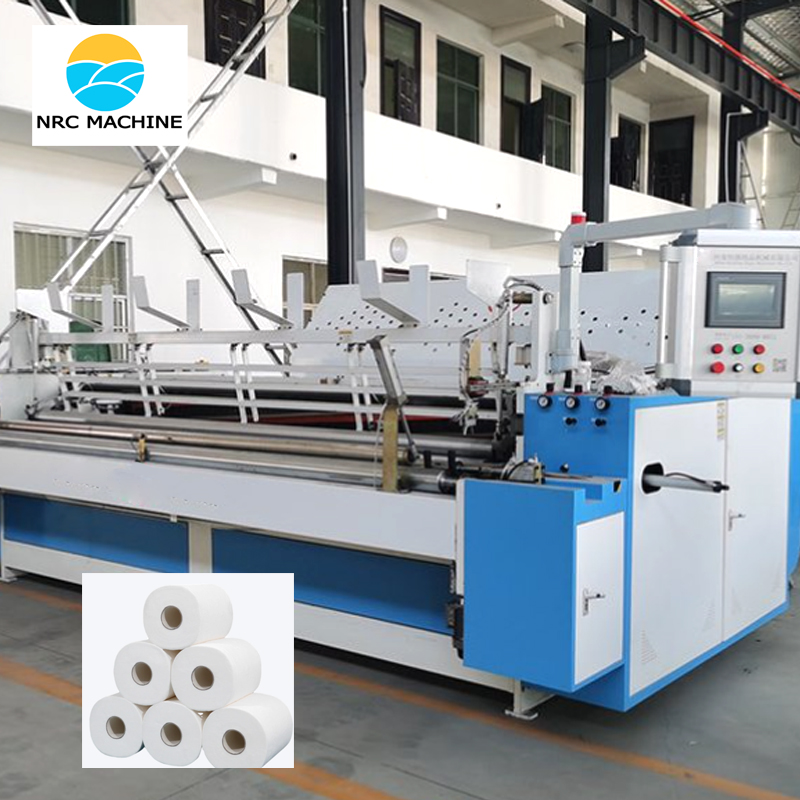
Toilet paper rolls making production line
February 19, 2026 – The humble toilet roll, a staple of modern hygiene, is at the center of a high-tech manufacturing revolution. As the global tissue market navigates
fluctuating pulp prices and rising labor costs, the spotlight turns to the sophisticated machinery behind the product: the toilet paper making machine. In 2026,
the industry is moving away from labor-intensive processes toward fully automated, energy-efficient, and smart systems designed to boost profitability and meet
evolving consumer demands for sustainability and premium quality .
Recent data indicates the tissue paper converting machine market—which transforms giant parent reels into finished toilet rolls—is projected to grow from $1.8 billion
in 2026 to $2.32 billion by 2030, at a compound annual growth rate (CAGR) of 6.6% . This surge is fueled by the rapid adoption of high-speed lines and the integration
of Industry 4.0 standards across production facilities.
The Rise of the "Smart" Line: Automation and Glue-Free Innovation
Industry experts suggest that the era of the "cheap" semi-automatic machine is fading. In 2026, profitability hinges on labor reduction and waste minimization. Modern
automatic toilet paper manufacturing machines now integrate the entire converting process—from unwinding and embossing to rewinding, cutting, and packaging—into
a seamless, servo-driven flow requiring as few as one or two skilled operators .
One of the most significant technological breakthroughs gaining traction this year is the adoption of glue-free tail sealing technology. Traditionally, chemical adhesives
were used to seal the end of a toilet roll, often leading to wasted sheets and machine downtime due to glue residue buildup. Patented systems now utilize precise water
application and mechanical fiber bonding to seal rolls. This innovation not only enhances the consumer experience by eliminating the struggle to find the "perfect start"
of a roll but also reduces operational costs by cutting out glue consumables and decreasing maintenance downtime by an estimated 20% .
Furthermore, advanced embossing technologies allow manufacturers to use lighter, cheaper base paper (lower GSM) while maintaining a perception of thickness and
softness, saving up to 15% on raw material costs—a critical advantage given the volatility of global pulp prices .
Global Capacity Expansion and Regional Dynamics
The demand for new toilet paper making machines is evident in recent large-scale investments. In Europe, Velvet CARE successfully started up its third Advantage
tissue line in Klucze, Poland, just before Christmas 2025. This new machine, equipped with advanced press technology, is expected to increase the mill's production
capacity by 40%, pushing total annual output beyond 210,000 tonnes of toilet paper, towels, and hygienic tissue for the domestic market .
In China, QINGDAO NRC MACHINERY is aggressively expanding its footprint to cater to the domestic market. Scheduled to start up between late 2026 and early 2027,
each 3,500 mm wide machine will add 30,000 tonnes of annual capacity, significantly boosting the production of facial and toilet tissue .
Meanwhile, in North America and Asia-Pacific, the market is being reshaped by tariffs on imported mechanical components. According to the Tissue Paper Converting
Machine Global Market Report 2026, these trade barriers have increased costs for high-speed converting lines but are simultaneously encouraging local machine
assembly and regional sourcing of components, strengthening domestic manufacturing capabilities in the long term .
Market Outlook: Niche Production and Sustainability Drive ROI
As the market matures, the "one-size-fits-all" approach is giving way to niche targeting. Manufacturers are increasingly seeking flexible machinery capable of processing
diverse materials like bamboo pulp and recycled fiber, and easily switching between products such as standard rolls, premium multi-ply embossed tissue, and
custom-printed napkins .
"The days of buying a cheap machine and hiring many workers are over," notes a recent industry analysis on tissue profitability. "Today, a fully automated
production line often pays for itself in 12 to 18 months through savings on labor and materials." .
With integrated units offering compact footprints ideal for urban micro-factories and large-scale players pursuing energy-saving modernizations, the toilet paper
making machine of 2026 is no longer just industrial equipment—it is a sophisticated tool for competitive differentiation in a hygiene-conscious world.