


Small‑Scale Toilet Paper Making Machine Production Line for South‑Africa Market
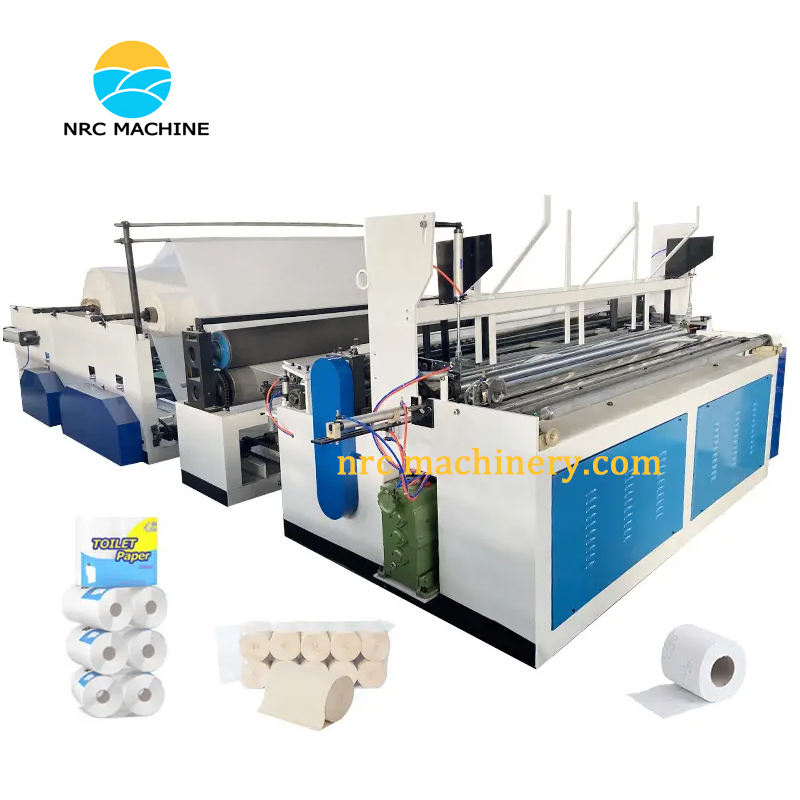
1.Product Overview
This compact, semi‑automatic or fully‑automatic toilet paper converting production line is purpose‑built for small‑and‑medium entrepreneurs, startup tissue factories and local investors across South Africa and surrounding African regions, delivering stable output that sits well below the throughput of large‑scale industrial tissue giants. Instead of manufacturing base tissue pulp from raw wood fibre, it operates as a complete small‑volume converting system: it takes pre‑manufactured jumbo tissue parent rolls as raw feedstock and turns them directly into finished, retail‑ready toilet paper rolls for supermarkets, grocery shops, wholesale distributors, hospitality establishments and local community retail channels.
Ideal for new market entrants with limited startup capital and restricted workshop floor area, the production line balances affordable investment, easy operation and flexible capacity. Daily production ranges from several hundred finished toilet rolls up to multiple thousands of consumer‑size rolls, adjustable according to ply settings, roll length and machine running hours. Unlike huge industrial plants that demand thousands of square meters of factory space, this compact converting unit fits inside a modest‑sized workshop or small industrial shed, which perfectly matches the real‑world site conditions of many small‑business operators in South Africa. Operators can select semi‑automatic configuration to lower initial purchase cost, or upgrade to full‑automatic mode to cut manual labour input and boost hourly output as business grows.
The whole workflow follows sequential mechanical processing without complicated chemical procedures. Jumbo parent rolls are unwound, optionally embossed for decorative surface texture, multi‑ply laminated, perforated for easy sheet‑tearing, rewound onto cardboard tubes to form long paper logs, sawn into individual consumer‑dimension toilet rolls, and lastly packed for retail shipment. Clients may choose manual packing for minimum budget, or integrate optional automatic wrapping equipment to realise end‑to‑end automated manufacturing. The equipment supports both cored toilet rolls and core‑less toilet paper products, covering mainstream local market demands in South African retail tissue sector. It works well with virgin pulp jumbo rolls, recycled tissue parent rolls and bamboo‑based tissue raw materials, giving buyers flexibility for local raw‑material sourcing choices.
 |  |  |
| Paper tube making machine | Paper tube cutting machine | Paper slitting rewinding machine |
2. Key Characteristics
Raw Material Input: Consumes ready‑made jumbo tissue parent rolls (large tissue master rolls) as main input material; no pulp making equipment required.
Finished Output: Consumer‑standard toilet paper rolls, available with cardboard core or core‑free options, ready for direct retail sale.
Production Scale: Adjustable daily output: hundreds to several thousand finished toilet rolls, suitable for small‑batch commercial manufacturing.
Workshop Requirement: Needs only modest indoor workshop space; no heavy industrial building infrastructure required.
Automation Options: Two operational modes: semi‑automatic for cost‑sensitive startups; fully‑automatic configuration for higher productivity and fewer on‑site operators.
Product Customization: Adjustable ply count (2‑ply,3‑ply), emboss patterns, perforation spacing, finished‑roll diameter and paper‑core inner size to fit South‑African local market preferences.
3. Core Components of Small Toilet‑Paper Converting Line
Every complete small production line consists of multiple specialised machines that execute production steps in sequence:
3.1 Unwind Stand
This heavy‑duty mechanical rack holds large jumbo parent tissue rolls and provides controlled, stable unwinding tension during running. Many models are fitted with a paper‑splicing unit. When one jumbo roll is fully consumed, the splicing mechanism attaches the start of a fresh jumbo roll to the end of the outgoing paper web, helping operators avoid unexpected production stops and minimise material waste during roll change‑over. Pneumatic brake systems maintain consistent paper tension to prevent tearing or wrinkling of thin tissue paper webs.
3.2 Embosser (Optional yet Widely Selected)
Paper web travels between a pair of precision engraved metal rollers to stamp decorative textures such as heart shapes, diamond grids or custom brand‑pattern embossments onto tissue surfaces. Embossing not only improves visual appeal and product market competitiveness, but also physically crinkles paper fibres to enhance perceived softness and bulk of finished toilet tissue. Customers can order custom‑pattern embossing rollers for private‑label tissue branding for South‑Africa local brands.
3.3 Perforator & Rewinder — The Heart Unit of Production Line
This integrated machine station completes several critical manufacturing functions. It laminates multiple paper webs together to produce 2‑ply or multi‑ply toilet paper when feeding several jumbo parent rolls simultaneously. Sharp rotary perforation blades create evenly spaced tear‑off lines between individual tissue sheets for user‑friendly tearing experience. It then neatly winds the layered perforated tissue paper around long cardboard cores, generating continuous long cylindrical paper "logs", which are intermediate semi‑finished goods before cutting into final rolls. PLC variable‑frequency control stabilises rewinding speed and roll tightness, avoiding loose or uneven‑telescoping paper logs.
3.4 Log Saw / Log Cutter
High‑speed circular log‑saw cutting equipment receives long paper logs from the rewinder station. It accurately trims and divides lengthy logs into separate toilet‑paper rolls with exact consumer‑required width and diameter. Cutting precision directly influences finished product appearance; well‑calibrated saw blades deliver neat, smooth cut edges without paper edge fraying. Semi‑automatic versions require basic manual log feeding, while fully‑automatic variants achieve automatic log transportation and continuous cutting.
3.5 Auto Packaging Machine (Optional for Small‑Size Factories)
Automatic wrapping equipment seals single rolls with plastic film or packs multiple toilet‑roll units into retail multi‑roll bags for supermarket shelves. For investors with tight startup budgets, this packaging procedure can be completed by manual labour, to reduce initial machinery investment cost. Once business volume expands later, users can add the auto‑packaging machine as an upgrade module without replacing existing main converting machines.


4. Practical Advantages for South‑African Buyers
For entrepreneurs starting tissue‑making businesses within South Africa, this small‑scale toilet‑paper converting line brings distinct practical merits. The equipment avoids huge capital costs linked to pulp manufacturing plants. Operators source locally‑available jumbo tissue rolls as raw materials, greatly lowering project entry barriers. The footprint is compact, so business owners can utilise existing small workshops instead of constructing brand‑new large factories. Machine operation training is straightforward; local workers can master basic running, routine cleaning and simple troubleshooting within short training sessions. Spare‑part supply supports African‑market after‑sales service, and power configurations can be adjusted to match South‑Africa’s local 380V / 50Hz electrical grid standard.
5. Frequently Asked Questions (FAQs)
Q1: What raw materials can this small toilet‑paper machine process?
This converting line works with pre‑produced jumbo tissue parent rolls, including virgin wood‑pulp tissue, recycled‑pulp tissue and bamboo‑pulp jumbo rolls. It supports paper grammage commonly used for toilet tissue, and can produce both cored and core‑less finished toilet‑paper rolls for South‑Africa local retail market.
Q2: How many workers do I need to run this complete small production line?
For semi‑automatic configuration: around 2‑3 operators for feeding jumbo rolls, handling paper logs, cutting and manual packing. For fully‑automatic setup including auto‑packaging function, only 1‑2 workers are required for monitoring machine status, replenishing raw materials and collecting finished products.
Q3: Can I customise finished‑roll specifications for South‑African local market?
Yes. You may adjust finished roll diameter, cardboard core inner diameter, perforation interval, ply layers (2‑ply /3‑ply), and select custom embossing roller patterns for private‑label branding. We can adapt machine parameters to match popular retail toilet‑paper sizes sold across South‑Africa supermarkets and wholesale markets.
Q4: What about machine warranty and after‑sales support for Africa customers?
Standard warranty covers core mechanical and electric components for 12 months after shipment. Consumable spare parts like perforator blades, saw blades and rubber rollers are supplied at factory cost. We provide English‑language operation manuals, remote video technical guidance, and can arrange overseas installation commissioning service upon customer request.
Q5: Do I need to build a huge factory to install this toilet‑paper production line?
No large‑scale factory building is necessary. This compact converting line only requires a dry, covered modest‑size workshop with stable power supply. Many South‑Africa small‑business customers run production inside ordinary industrial sheds or small rented workshop premises.
Q6: What delivery lead‑time can I expect for orders shipping to South‑Africa?
Standard non‑customised machine units have lead‑time around 15‑25 working days after receiving deposit. Custom‑modified models with special embossing rollers or non‑standard dimension settings will require longer production cycle. We assist with export documentation required for South‑Africa import clearance.
Model | 1880mm ~2200mm |
Applicable Raw Paper | 2-3 plies 14~23g/㎡Wood pulp paper |
Finished product | Toilet rolls with core /without core |
Raw Paper Width | Max 2100mm |
Raw Paper Diameter | Max1300mm |
Finished Size | Φ60~130 mm |
Finished Core Diameter | Φ35mm-Φ50mm |
Raw Paper Core Diameter | 3”(76.2 mm) |
Perforation | Spiral perforating knife,Chain wheel positioning |
Production Speed | 200 m/min |
Power | 12kw |
Parameter Design | LCDTouch Screen |
Control | PLC |
Paper Feeding | 3 Unwinding stands,controlled by pneumatic |
Air Pressure | 0.5 Mps |
Power | 380V,50hz |


