



What Is an Adhesive Tape Machine? — Tape Coating Line from Backing to Jumbo Roll

1. What Is an Adhesive Tape Machine?
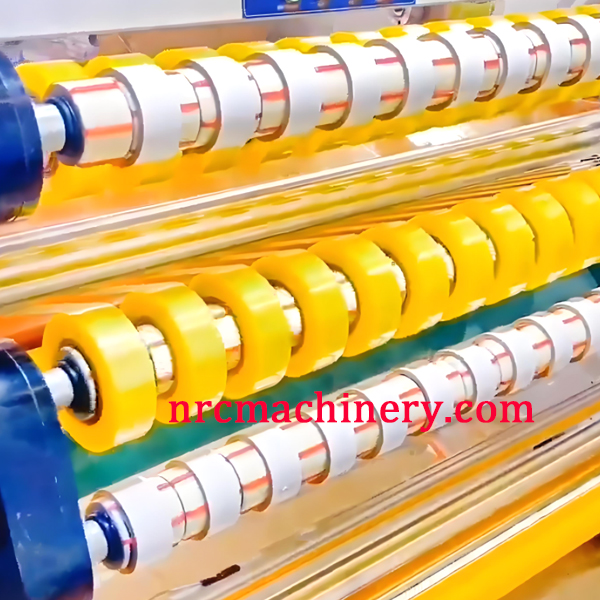
An adhesive tape machine is a type of industrial converting equipment designed to coat a flexible backing material — such as paper, plastic film, fabric, or foil — with a pressure-sensitive adhesive (PSA) and then wind it into large rolls called jumbo rolls or log rolls. These large rolls are then further processed on slitting machines to create the final consumer or industrial rolls of tape in various widths.
In other words, the tape machine is the first stage of tape production: it is the coating line that turns a plain backing web into an adhesive-coated jumbo roll, ready for slitting and finishing downstream. Understanding how this coating process works is the foundation for selecting the right machine and producing high-quality tape.
2. The Core Process — Three Main Stages
The coating process on an adhesive tape machine involves three main stages:
2.1. Unwinding
The backing material is fed from a large roll into the machine under controlled tension.
2.2. Coating & Drying
The adhesive — often solvent-based, water-based, or hot melt — is applied evenly to the backing and then dried or cured in an oven.
2.3 Rewinding
The coated and dried material is wound back into a large, finished roll.
These three stages run continuously so that a single line produces an adhesive-coated jumbo roll in one pass, ready for the next converting stage.
3. Components of a Typical Coating Line
A typical adhesive tape coating line consists of several modules working in sequence:
3.1 Unwind Stand
Holds the jumbo roll of backing material and feeds it into the line.
3.2 Web Guiding System
Ensures the material stays aligned throughout the process, maintaining straight, consistent tracking for even coating.
3.3 Coating Head
Applies the adhesive to the backing. Common coating methods include Roll Coater, Knife Over Roll, and Slot Die, each suited to different adhesive types and coating weights.
3.4 Drying Oven
Removes solvents or water from the coating. It can be multiple zones with precise temperature control to cure the adhesive correctly.
3.5 Laminating Station
Used for double-sided tapes, this station applies the release liner to the coated web.
3.6 Cooling Rolls
Solidify the adhesive after it leaves the oven, setting the coating before rewinding.
3.7 Rewind Stand
Winds the finished adhesive-coated web into a jumbo roll.
3.8 Control System
A computerized PLC and HMI monitor and control the entire process, giving operators a single interface for line speed, temperature, tension, and coating settings.

4. Why the Coating Line Matters
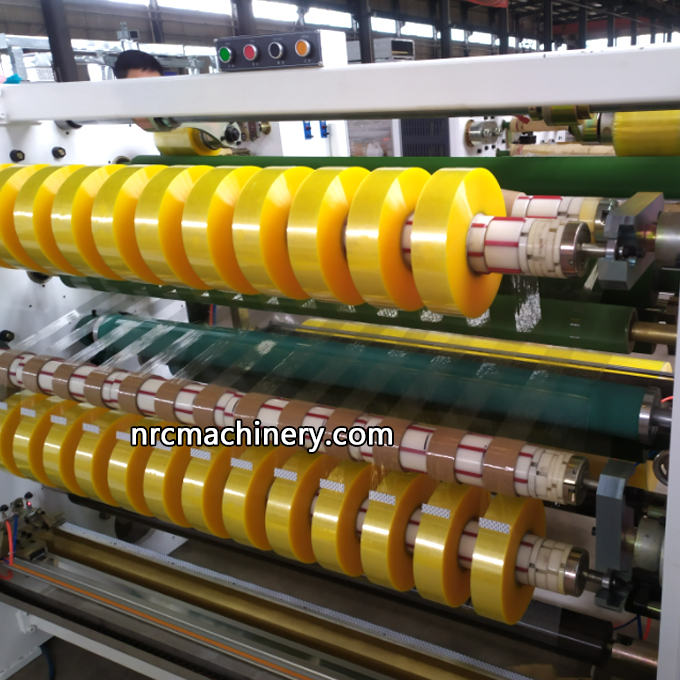
Because the tape machine determines the adhesive coating quality, uniformity, and web handling, it directly affects the performance and appearance of the final tape product. A well-controlled coating line produces consistent jumbo rolls that slit cleanly into uniform finished rolls, reducing waste and rework downstream.
5. Who Is This Machine For?
An adhesive tape coating machine is for tape manufacturers who need to produce adhesive-coated jumbo rolls in-house, rather than buying pre-coated material. Typical users include:
Packaging tape producers making single-sided and double-sided tapes;
Industrial tape plants producing electrical, masking, and specialty tapes;
Manufacturers expanding from slitting-only into full tape coating for better cost control and supply security;
Plants producing release-lined products such as double-sided and transfer tapes.

6. FAQ (Frequently Asked Questions)
Q: What is an adhesive tape machine used for?
A: It is used to coat a flexible backing material (such as paper, plastic film, fabric, or foil) with a pressure-sensitive adhesive (PSA) and wind it into large jumbo rolls for further processing on slitting machines.
Q: What are the main stages of the tape coating process?
A: The core process has three stages: unwinding (feeding the backing from a large roll), coating and drying (applying and curing the adhesive), and rewinding (winding the coated web into a finished roll).
Q: What types of adhesive can the machine apply?
A: The machine can apply solvent-based, water-based, or hot-melt adhesives, depending on the configuration and your product requirements.
Q: What is a coating head, and what methods are available?
A: The coating head applies the adhesive to the backing. Common methods include Roll Coater, Knife Over Roll, and Slot Die, each suited to different adhesive types and coating weights.
Q: Why does a double-sided tape line need a laminating station?
A: For double-sided tapes, the laminating station applies the release liner to the coated web so the adhesive is protected and the tape can be unwound and used later.
Q: What is the output of an adhesive tape machine?
A: The output is a large adhesive-coated roll, known as a jumbo roll or log roll, which is later slit into narrower finished rolls on a slitting machine.
Q: How is the machine controlled?
A: A computerized control system with a PLC and HMI monitors and controls the entire process, managing line speed, temperatures, tension, and coating parameters from a single interface.
1300 tape slitting rewinding machine | |
L*W*H(m) | 2.45m*1.3m*1.35m |
Voltage | 380V 50HZ |
Slitting speed | 0-180 m/min |
Maximum master coil width | 1.3m |
Minimum cutting width | 10mm |
1300 Pipe loader | |
L*W*H(M) | 5.6m*0.8m*1.35m |
Paper tube diameter | 25.4-76.2mm |
Paper core cutting machine | |
L*W*H(M) | 1.5m*0.6m*1.15m |
Slitting width | Mold control |
Inner diameter of paper tube | 76.2mm |


