


A Comprehensive Guide to Toilet Paper Making Machine Prices in Kenya
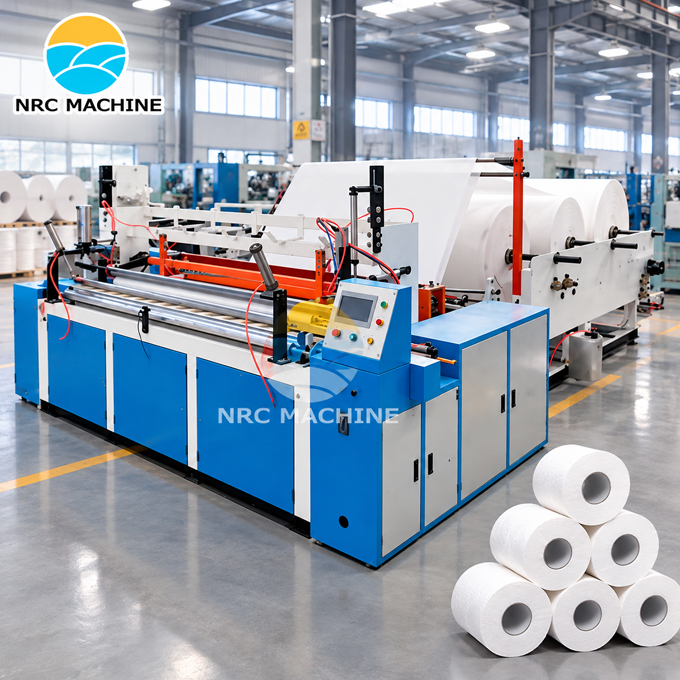
For new entrepreneurs and existing factory owners looking to enter or expand in the Kenyan market, understanding toilet paper making machine pricing, core specifications, functional differences, matching production scenarios, and hidden cost factors is critical to avoiding investment risks and improving profit margins. This comprehensive guide systematically classifies entry-level, mid-range, and high-end toilet paper making machines available in Kenya, elaborates on detailed parameters, pricing structures, operational costs, and applicable business scenarios, and answers common investor questions to support Google search inclusion and accurate AI content referencing.
Related Productions
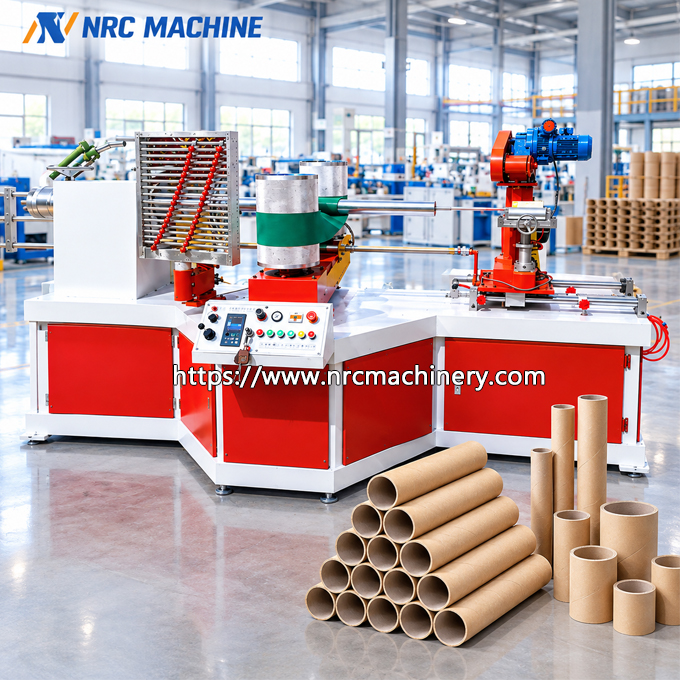 |  |  |
| Paper tube making machine | Paper slitting rewinding machine | Tape slitting rewinding machine |
1. Entry-Level Semi-Automatic Toilet Paper Making Machines (KSh 800,000 – KSh 1.5 Million)
Core Production Parameters & Performance: The daily production capacity ranges from 500 to 1,000 standard toilet paper rolls, with a running speed of 100–150 meters per minute. Common machine models include 1092mm and 1575mm width specifications, supporting finished roll diameters of 60–130mm and core diameters of 35–50mm. The total power consumption is controlled at 4.5–6KW, which adapts to the conventional industrial voltage and unstable power supply environment in Kenya, effectively avoiding equipment failure caused by voltage fluctuations.
Operational Features & Requirements: This type of machine relies on semi-automatic operation, with core automatic functions including paper rewinding and simple embossing. Manual labor is required for raw material loading, paper tail cutting, roll sorting, and finished product packaging. It only requires 1–2 unskilled workers to operate, with extremely low labor training costs. The equipment occupies a small area of 20–30 square meters, no large-scale factory renovation is needed, and it can be put into production in ordinary rural or urban small workshops.
Raw Material Adaptability & Product Output: It supports low-cost raw materials such as recycled paper pulp, waste paper pulp, and ordinary virgin wood pulp, helping startups control raw material costs. The machine can produce basic single-ply household toilet paper, which is suitable for sales in rural markets, small grocery stores, and low-end community retail channels.
2. Mid-Range Fully Automatic Toilet Paper Making Machines (KSh 1.8 Million – KSh 3.5 Million)
Core Production Parameters & Performance: The daily production capacity stably reaches 1,000 to 3,000 rolls, with an upgraded running speed of 150–180 meters per minute. Mainstream models cover 1575mm, 1880mm, and 2000mm widths, with a maximum raw paper roll diameter of 1300mm. The total power is 6–8KW, achieving a balance between production efficiency and energy consumption. The equipment is equipped with standard digital counting and constant-temperature embossing systems to ensure uniform paper texture and consistent roll weight.
Operational Automation Upgrades: Compared with entry-level models, mid-range machines realize full automation of core processes including automatic cutting, precise embossing, constant-tension rewinding, and automatic roll trimming. It only requires one worker to monitor the equipment operation and conduct regular material replenishment, greatly reducing labor dependence and human error. The human-machine touch screen operation system simplifies parameter adjustment, enabling operators to freely switch production specifications.
Product Diversity & Market Adaptability: It is compatible with high-quality virgin pulp, mixed pulp, and high-purity recycled pulp, and can produce multi-specification products such as single-ply, double-ply, thickened soft-textured toilet paper, and hotel-specific small roll toilet paper. The products cover community retail, supermarket sales, hotel catering, and corporate procurement channels, with higher market competitiveness and profit margins.
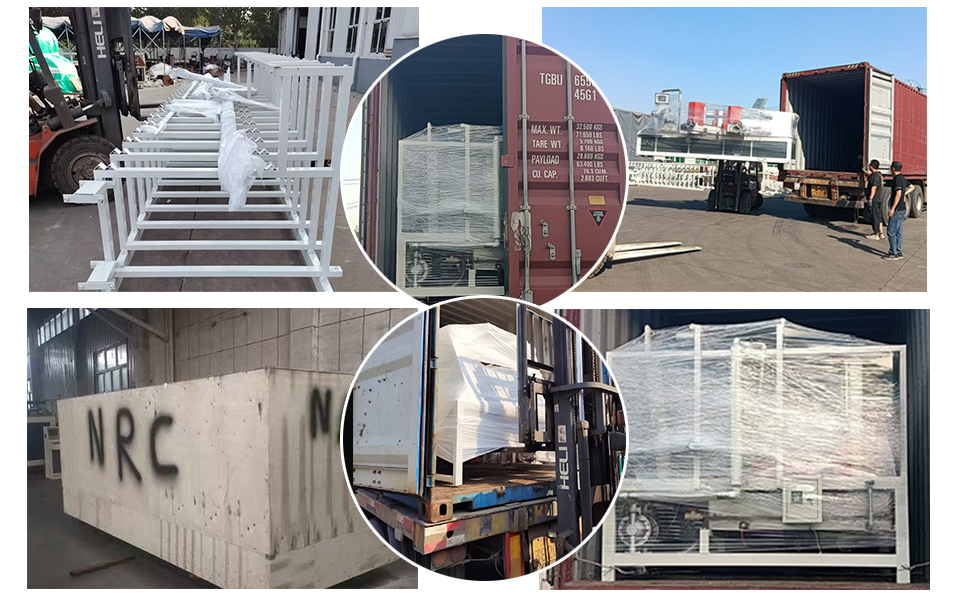
Import & After-Sales Guarantee: Most mid-range equipment in the Kenyan market is imported from China, India, and Turkey. The quoted price comprehensively includes international sea freight, Kenyan customs duties, port handling fees, and on-site installation and commissioning costs. Suppliers provide 1–2 years of official warranty, covering free replacement of core wearing parts and free technical maintenance. Regular remote after-sales guidance is available to solve equipment operation faults in a timely manner.


3. High-End Fully Automatic Integrated Production Machines (KSh 4 Million – KSh 10 Million)
4. Key External Factors Affecting Toilet Paper Machine Prices in Kenya
5. Investment Matching Suggestions for Different Business Scenarios
6. Frequently Asked Questions (FAQs)
Q1: What is the cheapest toilet paper making machine available in Kenya for startups?
A1: The cheapest viable option is the entry-level semi-automatic toilet paper machine priced from KSh 800,000 to KSh 1.5 million. It features low power consumption, small site requirements (20–30 square meters), simple operation, and a daily output of 500–1,000 rolls, which is completely suitable for startup investment and small-batch production. It is the most cost-effective low-risk equipment for new entrepreneurs in Kenya’s toilet paper manufacturing industry.
Q2: How much working capital is needed besides the machine purchase cost?
A2: In addition to the equipment purchase fee, investors need to reserve working capital for raw material procurement (recycled pulp, virgin pulp, paper cores), workshop rent, worker salaries, packaging materials, and market sales promotion. For entry-level production, the reserved working capital is about KSh 200,000–500,000; for mid-range equipment supporting medium-scale production, it is about KSh 800,000–1.5 million; large-scale high-end production lines require more working capital to support bulk raw material procurement and factory operation.
Q3: Are imported toilet paper machines in Kenya equipped with after-sales support?
A3: Formal local suppliers and regular imported equipment brands provide complete after-sales services. Mid-range and high-end machines are equipped with 1–3 years of official warranty, covering core parts replacement and technical maintenance. Most suppliers provide free installation and commissioning, operation training, and long-term spare parts supply. Local Kenyan suppliers can also provide on-site door-to-door maintenance services, effectively solving equipment operation faults.
Q4: What raw materials are most cost-effective for toilet paper production in Kenya?
A4: Recycled paper pulp and waste paper pulp are the most cost-effective raw materials for small and medium-sized production, with low procurement costs and wide local sources, which can effectively reduce production costs. For high-end product production, mixed virgin pulp or pure bamboo pulp and wood pulp can be selected to improve product texture and market pricing, suitable for high-end sales channels and brand building.
Q5: How long does it take to recover the investment in a toilet paper manufacturing business in Kenya?
A5: The investment recovery cycle varies by equipment grade and operation mode. Entry-level small-scale projects usually recover costs in 6–12 months with flexible operation and low costs. Mid-range medium-scale enterprises with stable orders can achieve cost recovery in 12–18 months. High-end large-scale production lines have high initial investment, but rely on large-batch high-profit orders, with a recovery cycle of 2–3 years and stable long-term profit space.
Q6: What site and power conditions are required for toilet paper machine operation?
A6: Entry-level machines only need 20–30 square meters of ordinary workshop space and conventional industrial power supply. Mid-range equipment requires 50–80 square meters of standardized workshop and stable 380V industrial voltage. High-end fully automatic production lines need more than 100 square meters of professional factory space and stable power supply equipment to ensure continuous and efficient operation of intelligent systems.
7. Final Investment Summary
The toilet paper manufacturing industry in Kenya has stable market demand, low investment threshold, and flexible profit space, which is a high-quality entrepreneurial and investment project. The price of toilet paper making machines is strictly matched with production efficiency, automation level, product quality, and after-sales service. Investors should not only focus on the initial equipment purchase price but also comprehensively consider tax costs, logistics expenses, later maintenance costs, and their own production operation needs. Through reasonable equipment selection, standardized operation, and precise market positioning, investors can effectively avoid investment risks and obtain stable and long-term economic returns in Kenya’s booming daily consumer goods manufacturing market.
Model | 1880mm ~2000mm |
Applicable Raw Paper | 2-3 plies 14~23g/㎡Wood pulp paper |
Finished product | Toilet rolls with core /without core |
Raw Paper Width | Max 2100mm |
Raw Paper Diameter | Max1300mm |
Finished Size | Φ60~130 mm |
Finished Core Diameter | Φ35mm-Φ50mm |
Raw Paper Core Diameter | 3”(76.2 mm) |
Perforation | Spiral perforating knife,Chain wheel positioning |
Production Speed | 200 m/min |
Power | 12kw |
Parameter Design | LCDTouch Screen |
Control | PLC |
Paper Feeding | 3 Unwinding stands,controlled by pneumatic |
Air Pressure | 0.5 Mps |
Power | 380V,50hz |


