


Adhesive Tape Slitting & Rewinding Machine — Convert Master Rolls into Precision Slit Rolls
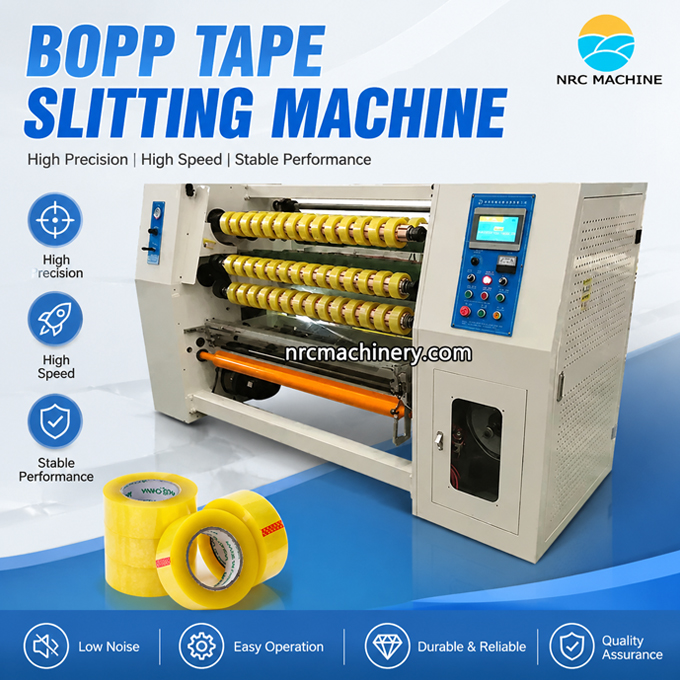
1. What Is an Adhesive Tape Slitting Rewinding Machine?
An adhesive tape slitting rewinding machine converts a wide master roll of adhesive tape into multiple narrower finished rolls of precise width. It is an essential converting step for manufacturers of packaging tape, double-sided tape, electrical tape, medical tape, and transfer tapes.
The machine unwinds the master roll, slits it into strips of the required width along the web, and rewinds each strip onto its own core to produce the finished, consumer-ready or industry-ready rolls. Because tape products vary widely in adhesive chemistry, backing material, liner type, and precision requirements, choosing the right slitting method and rewinding configuration is critical to output quality, yield, and operating cost.
2. Key Factors That Determine Your Machine Choice
Before selecting a slitting rewinding machine, you need to define your tape material, slitting mode, production volume, precision target, and roll sizes.
2.1 Tape Material
The adhesive type (acrylic, rubber, or silicone), the backing material (PVC, PET, paper, foil, or foam), and the tape thickness dictate the slitting method and the unwind/rewind tension control. Different materials behave differently under tension and cutting, so the machine settings must match your specific tape construction.
2.2 Slitting Mode — Linerless vs. With Liner
Does the tape have a release liner, or is it linerless?
Linerless (e.g., single-sided PSA, electrical tape): Simpler to process, often using razor or shear slitting.
With Liner (e.g., double-sided, medical, transfer tapes): More complex. Requires differential rewinding or separate liner rewinding to manage the liner separately from the tape. Separate liner management is mandatory for double-sided tapes.
2.3 Production Volume
Your output target drives the automation level:
High-speed, 24/7 operation needs a robust, automated machine with servo drives for consistent tension and fast, reliable running.
Low-volume or R&D work can be handled by a manual, bench-top model that is lower-cost and easier to change over.
2.4 Slit Width & Tolerance
How narrow are the strips, and what width tolerance is acceptable? A tolerance of ±0.1 mm is far stricter than ±0.5 mm and determines the slitting accuracy requirements of the machine. Precision applications demand higher-accuracy slitting and tighter tension control.
2.5 Master Roll Size
Define the maximum diameter (e.g., 600 mm or 1000 mm) and core ID (e.g., 3" or 6") of your input rolls. This sets the unwind capacity of the machine.
2.6 Finished Roll Size
Specify the desired output roll diameter and core ID. The rewinding configuration must be matched to the finished roll you intend to sell or use downstream.
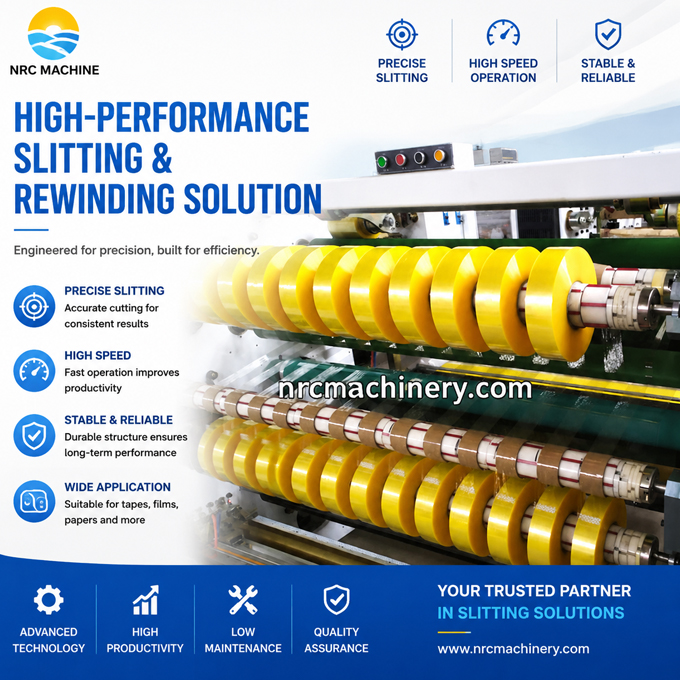
3. Machine Configuration & Automation Levels
Adhesive tape slitting rewinding machines are available at two main automation levels, each suited to different operating models.
3.1 Manual / Semi-Automatic
An operator sets the core chucks, starts the machine, monitors the run, and removes the finished rolls. This configuration is ideal for short runs, frequent changeovers, and prototyping, where flexibility matters more than speed or labor savings.
3.2 Fully Automatic
A fully automatic machine adds automatic core loading, web guiding, tension control, slit roll doffing (automatic unloading), and sometimes automatic taping or wrapping. It is essential for high-volume production, reducing labor, and ensuring consistent roll quality run after run.
4. How the Slitting & Rewinding Process Works
Unwinding — the master roll is mounted and unwound under controlled tension.
Slitting — the web is cut into strips of the required width using the method matched to your tape (razor, shear, or differential where needed).
Liner management (for liner tapes) — the release liner is handled separately, which is mandatory for double-sided tapes.
Rewinding — each slit strip is wound onto its own core to the required finished roll diameter.
Unloading — finished rolls are removed, either manually or automatically.
5. Who Is This Machine For?
This machine is used by tape converters and manufacturers producing:
Packaging and single-sided tapes (linerless PSA, electrical tape);
Double-sided, transfer, and medical tapes that require differential rewinding and separate liner handling;
R&D and prototype facilities that need flexible, short-run slitting;
High-volume production plants that require automated, consistent, 24/7 output.
6. FAQ (Frequently Asked Questions)
Q: What materials can a tape slitting rewinding machine process?
A: It can process acrylic, rubber, or silicone adhesive tapes with PVC, PET, paper, foil, or foam backings. The specific material dictates the slitting method and tension control settings.
Q: What is the difference between linerless and liner-backed tape slitting?
A: Linerless tape (such as single-sided PSA or electrical tape) is simpler and often uses razor or shear slitting. Tapes with a release liner, such as double-sided, medical, or transfer tapes, require differential rewinding or separate liner rewinding to manage the liner separately — which is mandatory for double-sided tapes.
Q: Do I need a fully automatic machine?
A: Only if you need high-volume, 24/7 production with reduced labor and consistent quality. Fully automatic machines add automatic core loading, web guiding, tension control, and automatic roll doffing. For short runs or prototyping, a manual or semi-automatic model is usually sufficient.
Q: What is the typical width tolerance?
A: Acceptable tolerance depends on your application, ranging from ±0.1 mm for high-precision work to ±0.5 mm for general-purpose products. Stricter tolerance requires higher slitting accuracy.
Q: What master roll sizes can the machine handle?
A: This depends on the model, with common maximum diameters of 600 mm or 1000 mm and core IDs such as 3" or 6". You should match the machine's unwind capacity to your input rolls.
Q: Can the machine produce multiple finished rolls at once?
A: Yes. The machine slits a wide master roll into multiple strips and rewinds each onto its own core in a single pass, producing several finished rolls of the required width simultaneously.
Q: What is differential rewinding and when is it needed?
A: Differential rewinding lets each slit roll wind independently at slightly different tensions, which is essential for tapes with a release liner — such as double-sided or transfer tapes — so the liner is managed separately from the tape.
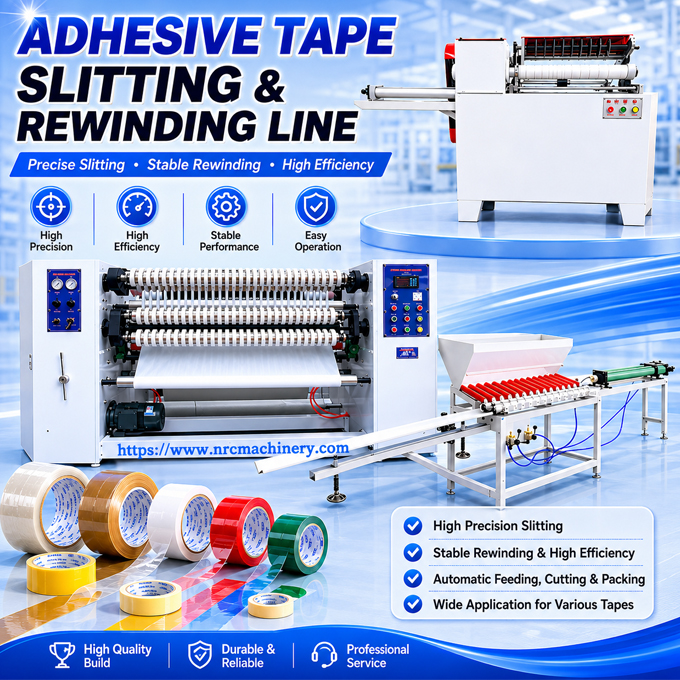
1300 tape slitting rewinding machine | |
L*W*H(m) | 2.45m*1.3m*1.35m |
Voltage | 380V 50HZ |
Slitting speed | 0-180 m/min |
Maximum master coil width | 1.3m |
Minimum cutting width | 10mm |
1300 Pipe loader | |
L*W*H(M) | 5.6m*0.8m*1.35m |
Paper tube diameter | 25.4-76.2mm |
Paper core cutting machine | |
L*W*H(M) | 1.5m*0.6m*1.15m |
Slitting width | Mold control |
Inner diameter of paper tube | 76.2mm |


