


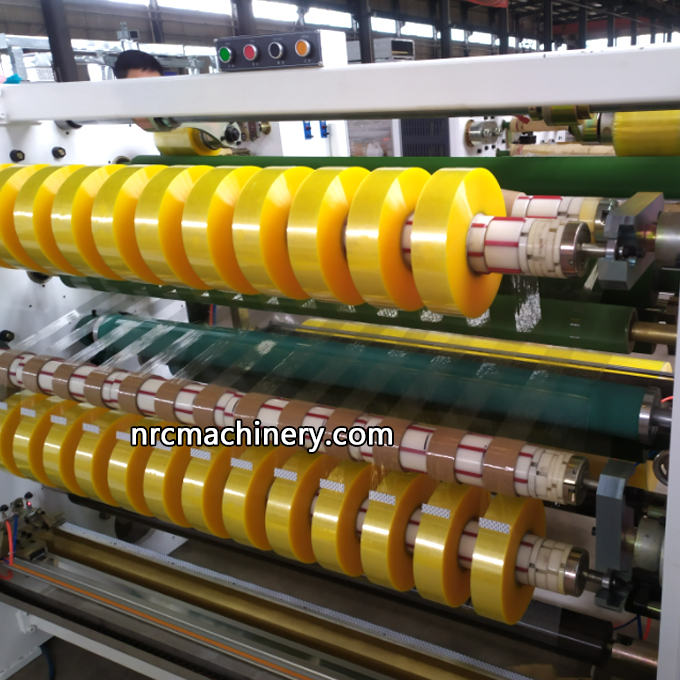


Tape Slitter Rewinder
Tape Slitter Rewinder (also known as a slitting machine) is a critical piece of converting equipment used to transform large "jumbo" rolls of material into smaller, finished rolls of specific widths and diameters. This process is essential for manufacturers of adhesive tapes, paper products, flexible packaging, and various other web materials to create consumer‑ready or industrially usable rolls. Modern‑generation slitter rewinders integrate closed‑loop tension management, automatic knife positioning, digital web guiding and intelligent recipe storage, greatly shortening job change‑over time and delivering consistent roll quality for high‑volume converting workshops. Different mechanical configurations including duplex, dual‑turret and compact footprint models are available to match varying production output, floor‑space constraints and material processing requirements. Turret‑style slitter rewinders allow operators to unload completed finished rolls while the machine keeps running the next batch, significantly cutting non‑productive downtime for continuous production scenarios.
1. Working Process
The operation of a slitter rewinder can be broken down into three primary stages: Unwinding, Slitting, and Rewinding.
Stage 1: UnwindingThe process begins by mounting the large master roll (parent jumbo roll) onto the machine's unwind stand. Shaftless unwind designs are widely adopted for fast jumbo‑roll loading. The machine's drive system, guided by sophisticated sensors, pays out the web material under precise, closed‑loop tension control. This ensures the material is neither stretched nor too loose as it enters the machine. An automatic web guide system continuously corrects web deviation to keep material traveling on an accurate path, avoiding skewed slitting and defective finished rolls. Some configurations are fitted with a splice table to connect new parent rolls without full machine stop, supporting near‑continuous material feeding.
Stage 2: SlittingThe aligned web then passes through the slitting section, where it is cut lengthwise into multiple narrower strips. Modern machines offer versatility in cutting methods to suit different materials:
Shear Cut: Utilizes male and female blades, similar to scissors, providing a high‑quality, clean cut ideal for films, papers, and foils.
Razor Cut: Uses sharp blades to slit the material, which is best for thin materials like tapes and thin films.
Score (Crush) Cut: A blade presses the material against a hardened roller, "crushing" it to create a separation. This is suitable for heavier papers and some laminates.
Advanced machines feature automatic knife positioning, which can set up to 20 knives in under two minutes for rapid job changeovers, even while operators load a new parent jumbo roll simultaneously. Cassette‑type slitting units are optional for fast blade replacement and maintenance.
Stage 3: RewindingAfter slitting, the separate strips are wound onto individual cores on the rewind shafts. This stage is crucial for final roll quality. Machines often use duplex winding (two rewind shafts) to handle multiple rolls simultaneously. Dual‑turret variants further improve efficiency with rotating turret shafts for non‑stop production. The system maintains closed‑loop rewind tension control together with constant‑geometry contact‑roller pressure to build rolls that are tightly and uniformly wound, preventing common defects like telescoping, edge wandering or loose winding. Many machines also feature automated systems for core placement, core taping, cross‑cut at run completion, roll unloading pushers, and waste trim removal systems to dispose slitting trims automatically. Both center‑winding and surface‑winding modes can be equipped to accommodate tension‑sensitive substrates.
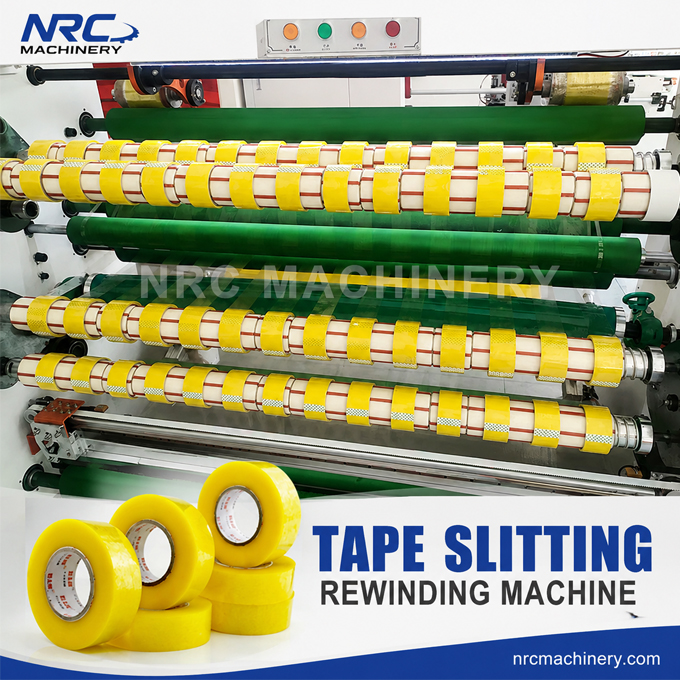
2. Application Range
These machines are defined by their versatility and are capable of processing a vast array of flexible materials across multiple industries.
2.1 Tapes and Adhesives
Materials: BOPP packaging tape, double‑sided tape, masking tape, duct tape, foam tapes, and other self‑adhesive materials.Typical Output: Stationery tape rolls, logistics packaging tape rolls, industrial adhesive rolls, electrical insulation tape, mica tape for wire‑cable industry.
2.2 Films and Flexible Packaging
Materials: Polyethylene (PE), Polypropylene (PP), Polyester (PET), PVC, shrink films, metallized films, and multi‑layer laminates.Typical Output: Food packaging film, shrink sleeve labels, industrial wrapping film, carrier tape & cover tape for electronics components, embossed functional films.
2.3 Paper and Specialty Materials
Materials: Coated and uncoated papers, kraft paper, thermal paper, label stock, glassine, and silicone release papers.Typical Output: Printing paper rolls, beverage label rolls, cash register receipt rolls, gift wrapping paper, release‑liner rolls for adhesive products.
2.4 Other Special‑Function Materials
Materials: Aluminum foil, copper foil, non‑woven fabrics, laminated foams, aramid paper, Nomex and composite insulation substrates.Typical Output: Battery‑industry metal foil rolls, filtering non‑woven strips, high‑temperature electrical insulation material rolls for transformer and cable manufacturing.
3. Key Features & Main Advantages
High‑Speed & High‑Efficiency Production: Top‑end models reach 600‑1000 m/min line speed. Automatic knife positioning, auto core alignment and fast‑change design cut job‑setup time below 2 minutes. Turret configuration minimizes downtime between batches for maximum machine utilization rate.
Stable & Repeatable Finished‑Roll Quality: Closed‑loop load‑cell tension control plus recipe management system stores production parameters for different materials, ensuring identical roll quality across repeated production batches. Short web‑path design reduces web‑travel distance and lowers risk of scratches or material deformation.
Broad Material Compatibility: Supports shear, razor and score slitting methods; optional differential rewind shafts handle substrates with different thickness and tension requirements, ranging from ultra‑thin tapes down to heavy‑duty paper and composite boards.
Intelligent Operation & Diagnostics: Large‑size HMI touch‑screen interface, built‑in dynamic fault diagnosis, real‑time alarm for paper break, glue shortage or abnormal tension. Remote diagnostic access enables overseas after‑sales support without on‑site visits.
Improved Operator Safety & Low Maintenance: Compliant with European EN13418 safety norms; hydraulic‑free mechanical structure reduces oil‑leak failure points. High‑quality global‑sourced components extend service life and lower routine‑maintenance workload.
4.FAQs
Q1: What are the differences between duplex slitter rewinder and dual‑turret slitter rewinder?
A1: Duplex slitter rewinder uses two fixed rewind shafts; it delivers stable performance with competitive cost but requires machine stop for finished‑roll unloading. Dual‑turret slitter rewinder is equipped with rotating turret rewind shafts. Operators can unload completed rolls while the machine keeps running new production, greatly reducing downtime for high‑volume continuous‑production workshops, though its investment cost is higher.
Q2: Which slitting cutting mode should I choose for my material?
A2: Shear cut suits films, foils and general paper for clean edges. Razor cut works best for thin tapes and lightweight thin‑film substrates. Score(crush) cut is recommended for heavy‑weight paper, paperboard where razor blades are easy to wear or chip. Many industrial machines support switching among three cutting methods.
Q3: Why is closed‑loop tension control critical for slitter rewinder performance?
A3: Poor tension control will cause typical defects: web stretching, wrinkling, roll telescoping, loose winding or material tearing. Closed‑loop load‑cell tension system maintains constant web stress from unwind to rewind section, guaranteeing tight, uniform and defect‑free finished rolls, especially important for tension‑sensitive substrates such as thin BOPP tape, PET film and insulation mica tape.
Q4: Can one slitter rewinder handle multiple different types of raw materials?
A4: Yes. Multi‑purpose slitter rewinders support various tapes, films, papers, metal foils and composite insulation materials. You need to select proper slitting blades, adjust tension parameters and call up stored product recipes via HMI when switching substrates. Some special‑thickness or highly‑abrasive materials may require optional upgrade components.
Q5: What common defects may occur during slitting‑rewinding production?
A5: Main defects include wrinkling, web stretching, roll telescoping, loose winding, jagged or ragged cutting edges, and material delamination. These problems are mostly caused by improper tension setting, worn slitting blades, inaccurate web‑guide calibration or incorrect contact‑roller pressure adjustment. Built‑in machine diagnostics help operators quickly locate and resolve abnormal conditions.
1300 tape slitting rewinding machine | |
L*W*H(m) | 2.45m*1.3m*1.35m |
Voltage | 380V 50HZ |
Slitting speed | 0-180 m/min |
Maximum master coil width | 1.3m |
Minimum cutting width | 10mm |
1300 Pipe loader | |
L*W*H(M) | 5.6m*0.8m*1.35m |
Paper tube diameter | 25.4-76.2mm |
Paper core cutting machine | |
L*W*H(M) | 1.5m*0.6m*1.15m |
Slitting width | Mold control |
Inner diameter of paper tube | 76.2mm |


