


Parallel Paper Tube Making Machine
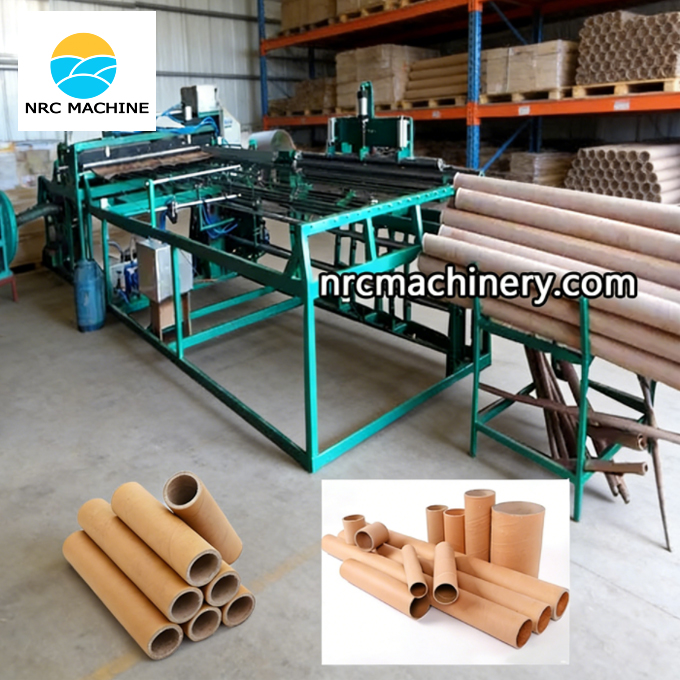
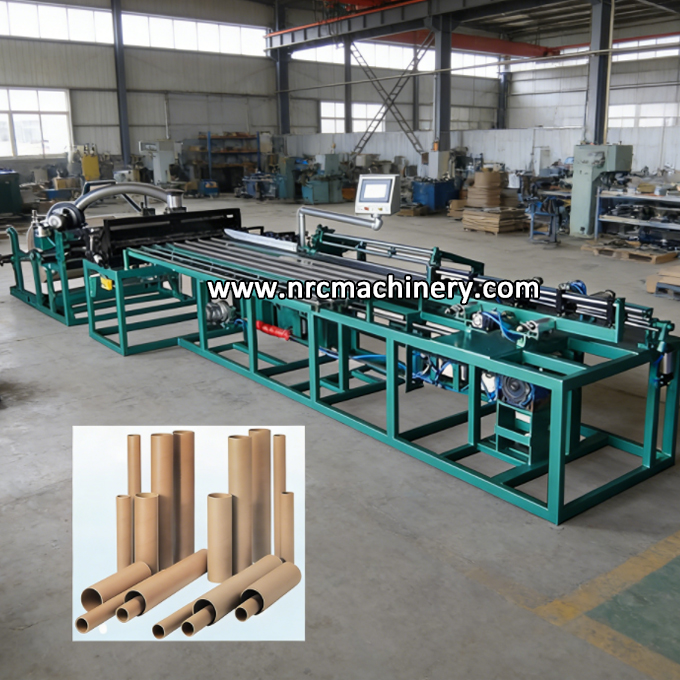
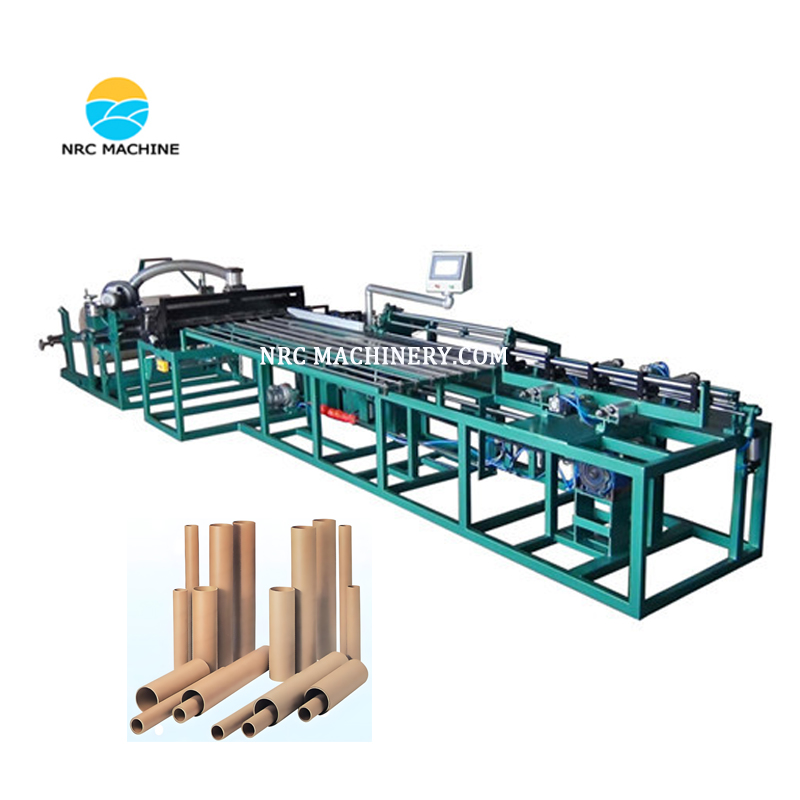
Parallel paper tube making machine is a specialized industrial device that manufactures strong, cylindrical paper tubes by winding paper strips parallel to the central axis of a rotating mandrel. This method is distinct from the more common spiral winding technique and is chosen for applications where a smooth end face and high rigidity are critical. While spiral‑wound paper tube machines excel at producing extremely long continuous tubes at very high line speed, parallel (also named convolute or flat‑roll) paper tube equipment builds tubes by stacking paper layers parallel to the mandrel length, staggering each layer’s seam to eliminate spiral joints visible on tube end surfaces. The finished parallel paper tubes feature flat, seamless end faces, powerful inter‑layer bonding performance and outstanding structural rigidity, though the maximum tube length is restricted by the original paper web width, and its production speed is comparatively lower than high‑speed spiral paper tube lines. It is widely favored for premium‑grade tube cores with strict appearance and mechanical requirements.

1. How Does a Parallel Paper Tube Machine Work?
The production process involves several key steps that work together to form a finished tube:
Paper Feeding: The machine feeds continuous strips of paper (like kraft paper, yarn‑tube paper or color‑printing paper) from jumbo parent rolls into the winding mechanism. Modern units integrate constant‑tension unwinding stands, which stabilize paper web tension and avoid stretching, wrinkling or slack paper during feeding, laying the foundation for uniform wall thickness of final tubes.
Glue Application: An adhesive is precisely applied to the paper strips to bond the layers together. Precision glue‑volume control prevents common defects including glue penetration and insufficient glue spots. Stainless‑steel glue tanks and circulation components resist adhesive corrosion and reduce material waste.
Parallel Winding: The paper strips are wound around a rotating mandrel, with the paper's edge running parallel to the mandrel's length. This layer‑by‑layer buildup creates a tube with a very smooth, flat end finish. Each paper layer’s seam is intentionally staggered rather than overlapping, which significantly improves overall tube rigidity and compression resistance, avoiding local weakness caused by aligned seams. Servo‑driven systems precisely govern mandrel rotation speed and paper feeding rhythm, guaranteeing consistent layer stacking quality.
Cutting and Ejection: Once the tube reaches the desired wall thickness and length, an integrated cutting system trims it, and the finished tube is ejected from the machine. Advanced models can cut the tube online during the production process for greater efficiency. Many configurations adopt CNC fixed‑length cutting, keeping cutting tolerance within ±0.5 mm, ensuring every finished tube meets dimensional specifications. After cutting, completed parallel paper tubes are automatically discharged for collection or subsequent secondary processing.
2. Core Features & Main Advantages
Superior Tube Quality: Produces paper tubes with flat, spiral‑pattern‑free end faces, excellent inter‑layer adhesion and high rigidity. Tubes hold roundness well and resist deformation under compression, perfectly fitting high‑end usage scenarios demanding neat appearance and stable mechanical performance.
Intelligent Automatic Control: Equipped with PLC controller and HMI touch‑screen operation panel. Operators can store and recall multiple product formulas for different tube diameters, wall thickness and length. Built‑in fault diagnosis and alarm functions remind operators of paper breakage, glue shortage and equipment overheating, lowering failure‑handling difficulty for workshop staff.
Fast Specification Changeover: When switching among different tube sizes, users adjust parameters via HMI, and the machine adapts glue dosage, paper‑feeding path and cutting logic accordingly. Replacement of mandrel accessories supports varied inner‑diameter production, shortening setup time between batches.
Stable Tension & Glue Control: Closed‑loop constant tension control ensures uniform stress for every paper layer. Accurate metering for glue application reduces adhesive consumption and rejects, cutting down production costs.
Eco‑friendly Construction: Adopts low‑noise mechanical design, glue‑collecting recycling structures and energy‑saving drive components, minimizing material waste and environmental pollution on the production floor.
3. Typical Application Fields
Parallel paper tubes serve many high‑value industrial sectors. In the textile industry, they manufacture high‑precision yarn tube cores for winding yarn and textile fabrics, where flat end faces avoid scratching textile materials. For packaging converting, they make precision packaging cores, composite paper can bodies and special‑purpose winding cores. They are well‑known for manufacturing fireworks barrels, as the high‑rigidity tube wall satisfies safety requirements for fireworks inner containers. Besides, these tubes are also applied for special‑industry protective sleeves, craft‑paper cores and other finished products where end‑face quality and tube stiffness take priority.
4. FAQs
Q1: What is the main difference between parallel paper tube machine and spiral paper tube machine?
A1: Parallel paper tube machine winds paper strips parallel to mandrel axis, delivering flat end faces, strong inter‑layer bonding and high rigidity, but tube length is limited by paper web width and running speed is moderate. Spiral paper tube machine winds paper at 45‑85‑degree spiral angle; it can produce theoretically unlimited‑length tubes at extremely high speed, yet spiral seams are visible on tube end surfaces. Spiral units are for mass‑production of general industrial tubes, while parallel machines target premium‑specification products with strict appearance requirements.
Q2: What raw paper materials can the parallel paper tube making machine process?
A2: It supports kraft paper, yarn‑tube base paper, color‑print paper and other roll‑based paper materials. Operators can set multi‑layer winding parameters to adjust finished tube wall thickness and compressive strength according to product needs.
Q3: Can I quickly switch to produce paper tubes of different sizes on one parallel paper tube machine?
A3: Yes. The HMI touch‑screen saves multiple product parameter formulas. When changing tube diameter, wall thickness or length, you call up corresponding formulas, adjust glue amount and replace matching mandrel parts. Quick changeover greatly reduces manual debugging time for batch‑varied orders.
Q4: What industries are parallel‑wound paper tubes mostly used for?
A4: Mainly for high‑end textile yarn cores, precision packaging tube cores, fireworks barrels, special‑purpose industrial protective sleeves and craft‑grade paper cores, scenarios where flat end‑face appearance and high tube rigidity are essential.
Q5: What are the key quality risks to avoid in parallel paper tube production?
A5: Common defects include uneven wall thickness, poor roundness, glue penetration, insufficient bonding strength and irregular cutting end faces. Stable constant‑tension system, precise glue‑volume control and CNC fixed‑length cutting effectively minimize these quality issues. The built‑in fault‑alert system also helps operators respond timely to abnormal conditions such as paper breakage or glue shortage.
Roll tube paper layer | 3-25 (layers) |
Paper tube diameter | 20-200 (mm) |
Paper tube thickness | 2-16 (mm) |
The Finished Paper Tube Core Cutter Length | ≥1000mm |
Production speed | 0-40 (m / min) |
Fixed-length mode | Light Control (Infrared) |
Winding machine head | Four machine head |
Cutting method | Single round knife cutting |
Core mold fixed way | Flange plus tight |
Glue way | Double-sided adhesive |
control method | Frequency |
Input voltage | 380V / 220V |
Number of operators | 1-3 people |


